Planning a Tile Project? Start with These Five Questions
Most tile projects start with the fun part: looking at tile.
Maybe you already have a few inspiration photos saved, a color in mind, or a particular look you keep coming back to. Or maybe you are starting from scratch and are not quite sure what belongs together yet.
Either way, after helping people plan tile projects for more than 50 years, we have learned that the easiest place to begin usually is not with a specific collection or color. It is with a few basic questions about the project itself.
Tile has to look good, of course, but it also has to be appropriate for where it is being installed, work with the materials around it, and make sense as part of the overall installation.
Thinking through those details first can make the choices that follow much easier.
1. Where Is the Tile Going, and How Will the Space Be Used?
A kitchen backsplash and a shower floor may both use tile, but they need to do very different jobs.
Before looking too closely at color, shape, or style, make sure the tile is appropriate for where it is going. Application should narrow the product choices before aesthetics do.
An entryway, for example, has to stand up to shoes, water, dirt, salt, pets, and regular traffic. A shower floor needs to perform well in a wet area and provide appropriate traction. Exterior tile has to handle moisture, changing temperatures, and Rochester’s freeze-thaw cycles.
Depending on the project, consider:
- Water and moisture: Will the surface regularly get wet?
- Daily traffic: Is this a busy floor or a decorative wall?
- Cleaning and maintenance: What will get on the tile, and how often will it need to be cleaned?
- Slip resistance: Is the tile going on a shower floor, entry, patio, or another area where traction matters?
- Weather exposure: For outdoor installations, is the product rated for the conditions it will experience?
Not every tile is right for every application, even if it has exactly the look you want. Sometimes the original choice works perfectly. Other times, there may be a similar color, texture, or style in a material that is better suited to the location.
Working that out first gives you a much more useful place to start.
2. What Else Is Already Going Into the Room?
Tile is usually one part of a much larger picture.
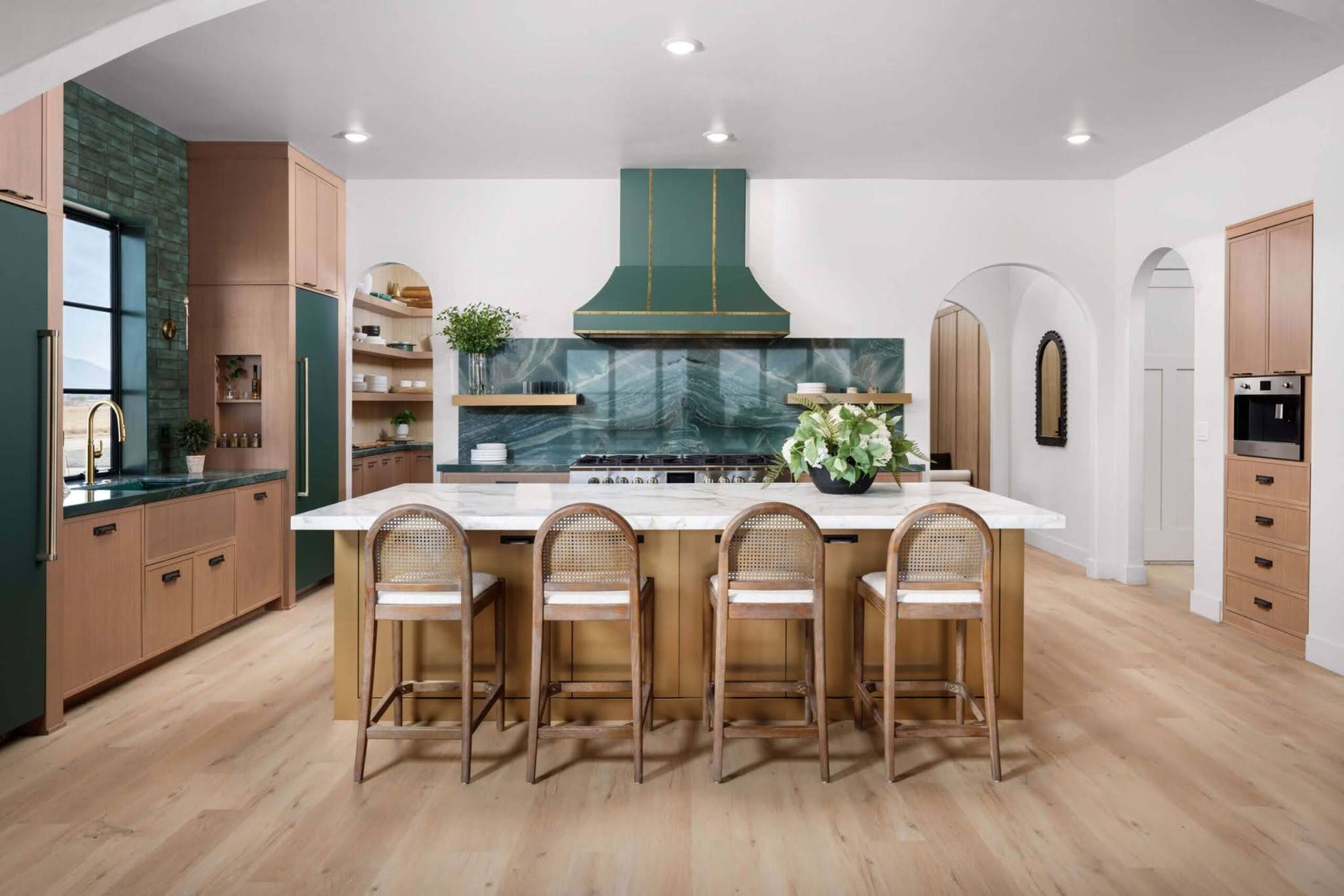
In a kitchen, it may need to work with cabinets, countertops, flooring, paint, hardware, and appliances. A bathroom might include a vanity, countertop, plumbing fixtures, shower glass, floor tile, wall tile, and a separate mosaic.
Whenever possible, bring the actual materials with you when you shop.
A few things that are especially helpful include a cabinet door or drawer front, countertop sample, flooring sample, and paint swatch. Photos of the full room and inspiration images are helpful, too, because they give us a better sense of the space and the overall direction you have in mind. Pinterest is a great starting point.

But when color needs to coordinate closely, the physical sample is usually more useful than a photo. Phone cameras, screens, and lighting can all shift color enough to make a warm white look cooler or a beige look more gray than it really is.
Once the materials are sitting next to each other, small details become easier to see. A warm undertone in a countertop may suddenly become obvious. A patterned floor might suggest keeping the shower walls simpler. A backsplash you loved online may look completely different against the actual cabinet finish.
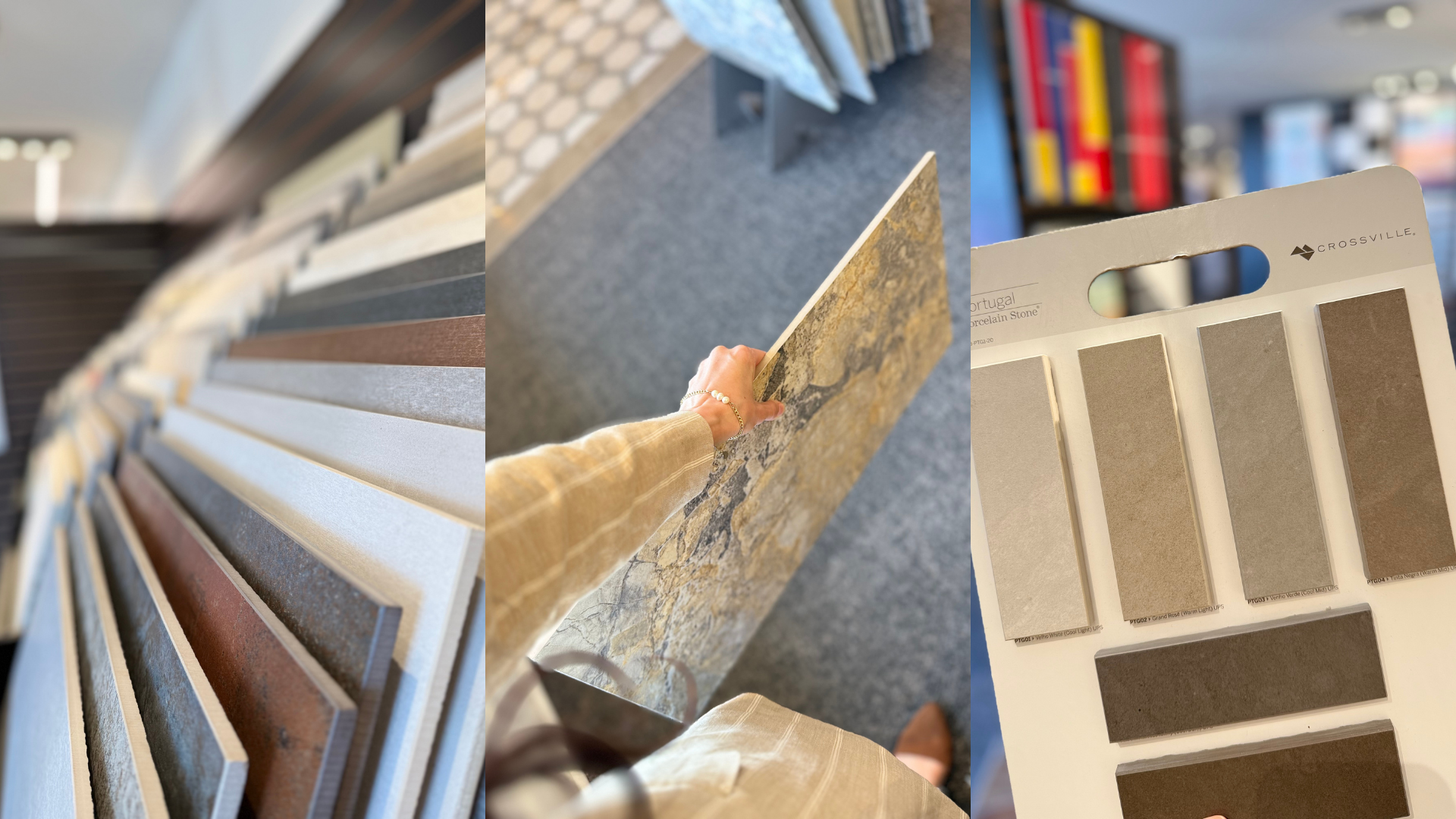
Once you have narrowed down your tile choices, take samples home before making the final decision.
Put them directly against the countertop, cabinets, vanity, flooring, or other materials they need to work with. Look at them in morning light, afternoon light, and after dark with the room’s lights turned on.
Tile can change quite a bit depending on its surroundings. Seeing it in the actual room is one of the simplest ways to feel more confident about the choice.
3. What Do You Want to Notice First?
When several materials are being selected for one room, it helps to decide which one you want people to notice first.
A simple rule we often use is: not every surface needs to be the feature.
If the countertop is the star: A kitchen with strong veining or a lot of movement in the countertop may benefit from a quieter backsplash that supports it rather than competing with it.
If the tile is the star: A patterned floor, colorful backsplash, dimensional wall tile, or natural stone mosaic can carry more of the room’s personality. The materials around it may not need their own strong pattern or movement.
The same idea applies in a bathroom. If the main floor has a distinctive pattern, simpler shower walls can give it room to stand out. If the shower is where you want more texture, color, or detail, the main floor can take a quieter approach.
This does not mean everything else has to be plain. It simply gives each material a role.
When selections start to feel busy, step back and ask yourself: What do I want my eye to go to first?
That question usually makes it much easier to see whether the different surfaces are working together or competing for attention.
4. What Will the Installation Require?
The tile gets most of the attention during the selection process, but there is quite a bit happening behind and around it.
Depending on the project, the installation may involve mortar, grout, waterproofing, crack-isolation products, underlayments, sealers, trim pieces, and other materials. We carry installation materials along with tile, so we can help homeowners and installers look at the project more completely rather than treating the finished tile as the only decision.
There are also several details worth working through before the tile is ordered.
How will exposed tile edges be finished? Where will the tile meet another flooring material? Does a shower niche affect the layout? Are matching trim or edge pieces available? Does the pattern require more material because of cuts and waste?
Quantity matters, too. Tile orders generally need to account for more than the exact square footage of the room. The appropriate amount of extra material depends on the tile, layout, room, and installation, so it is worth confirming quantities and waste with your installer before ordering.
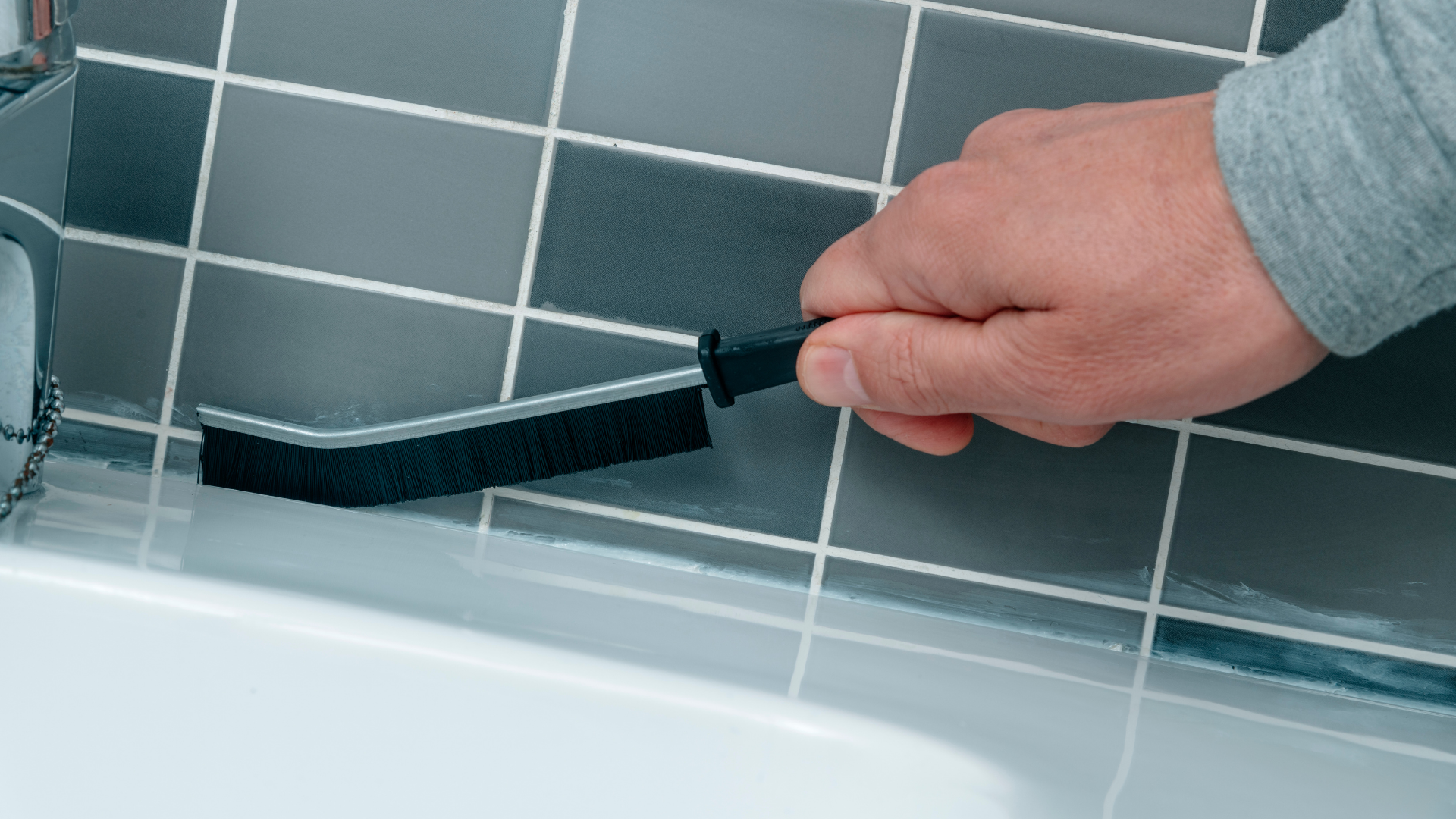
And then there is grout.
Grout can change the finished look more than people sometimes expect. If you want the tile to read as a quieter, more continuous surface, start by looking at grout colors close to the tile itself. If you want to emphasize a herringbone layout, hexagon shape, subway pattern, or other detail, more contrast will make each individual piece much more visible.
Whenever possible, look at an actual grout sample against the tile instead of relying only on a printed chart. On floors and other high-traffic areas, it can also be worth considering whether a slightly deeper neutral will be easier to live with than a very light grout.
These are all relatively small decisions, but they are much easier to make before installation begins.
5. What Do You Need to Know Before You Order?
By the time you have found a tile you like, it can be tempting to place the order and move on. Before you do, it is worth taking one more pass through the project.
Make sure you have worked through:
- Measurements: Are the dimensions accurate and does the installer agree?
- Quantity and overage: Has enough material been allowed for cuts, waste, and the layout?
- Availability and lead time: Is the tile available when the project needs it?
- Shade and variation: Does the product have natural or intentional variation that should be considered when ordering and installing it?
- Layout: Has the tile direction, pattern, or starting point been discussed?
- Grout: Have you chosen a color and confirmed the appropriate product?
- Trim and exposed edges: How will corners, niches, and unfinished edges be handled?
- Transitions: What happens where the tile meets another surface?
- Installation requirements: Has the installer confirmed the preparation and setting materials needed for the job?
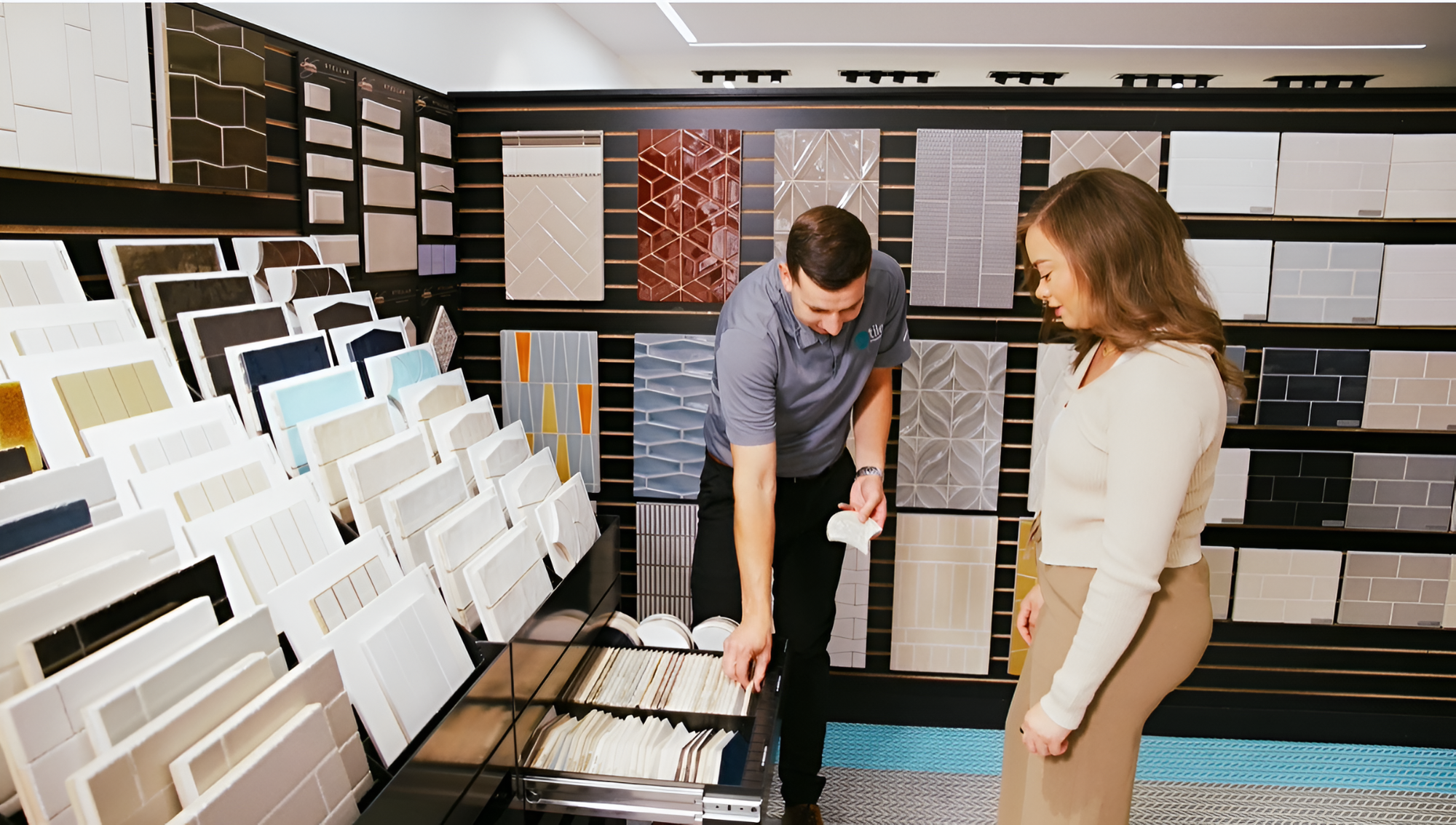
You may not know the answer to every question on your own, and that is perfectly fine. These are the kinds of details we work through with homeowners, contractors, designers, and builders in our showroom every day.
Being a local, family-run business also means we can spend time on those conversations. Sometimes the answer is straightforward. Other times, we may need to pull out a few samples, look at the room photos again, check the specifications, or talk through how an installer plans to approach the project.
The goal is simply to sort out as much as possible before the material arrives and the work starts.
A Little Planning Goes a Long Way
With so many tile options available, it is easy to start with the product. In our experience, starting with the project usually makes the process much easier.
A little planning up front helps narrow the choices, avoid last-minute surprises, and make sure the tile you love is also right for the space.
You do not need to have every detail figured out before you visit us. Bring your photos, measurements, inspiration, and any material samples you have, and we can help you work through the rest.
Visit our Rochester showroom, walk-ins welcome, or schedule a complimentary design consultation to get your tile project started with confidence.
Ready to See These Materials in Person?
Book a free consultation and let us help you choose the right tile for your project.
Book Appointment