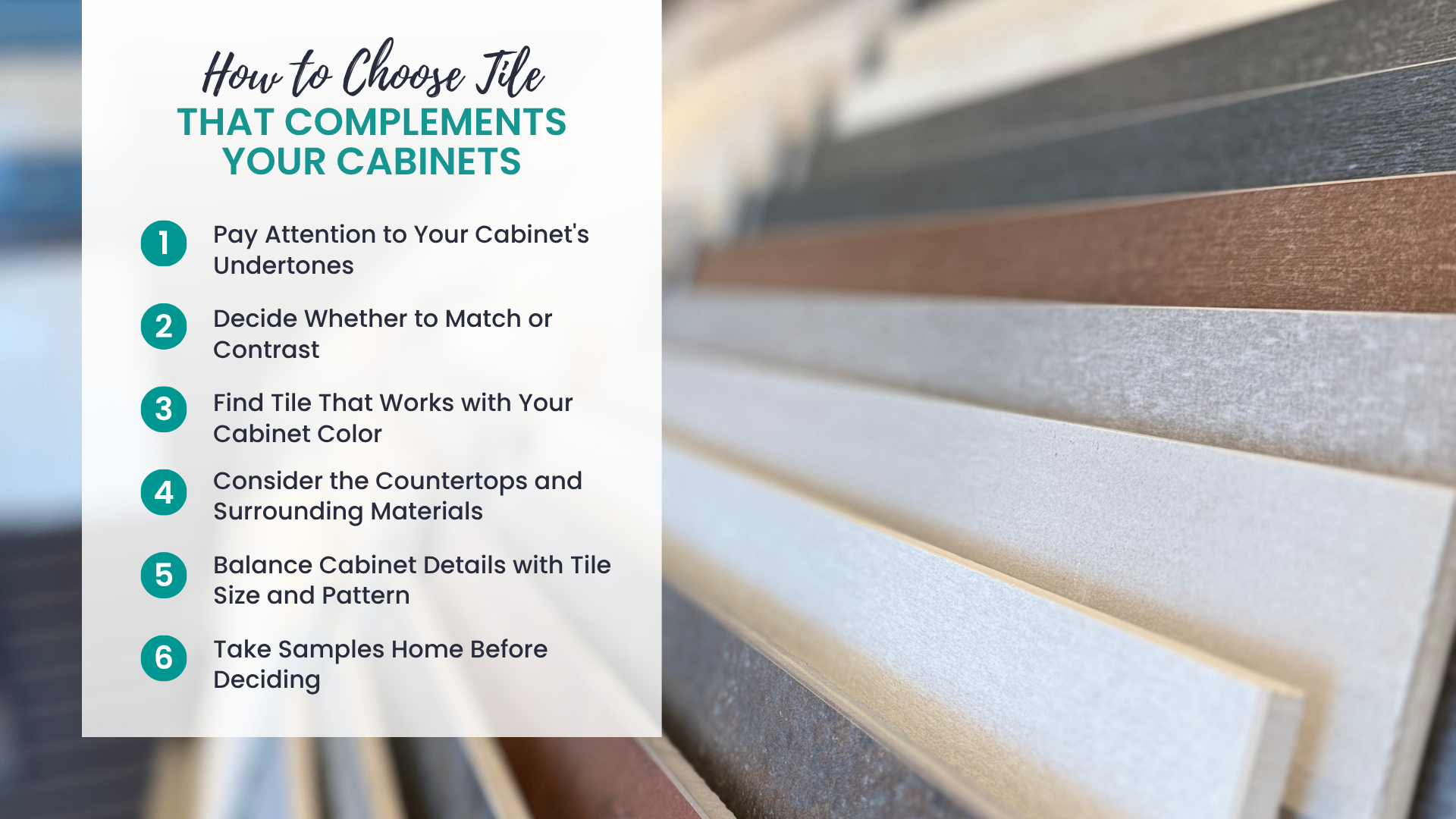
How to Choose Tile That Complements Your Cabinets
Choosing the right tile is one thing. Choosing tile that looks right next to your cabinets is another.
A beautiful tile sample can look completely different beside warm oak cabinetry, crisp white kitchen cabinets, or a dark green bathroom vanity. Colors shift, undertones become more noticeable, and certain patterns or textures suddenly stand out.
Cabinets are often one of the largest visual elements in a kitchen or bathroom, so they have a major influence on the tile you choose. Whether you're working with existing cabinetry or planning a complete remodel, the goal isn't necessarily to match everything. It's to find materials that complement one another.
Here's where to start.
1. Pay Attention to Your Cabinet's Undertones
Two sets of white cabinets might look nearly identical until you place the same tile sample beside them. One may have a warm, creamy undertone, while the other leans cooler or slightly gray.
Wood cabinetry brings even more variation, with golden, reddish, gray, or neutral undertones influencing how surrounding colors appear.
As a general starting point:
- Warm cabinets: Cream, beige, warm gray, and earthy tile colors often complement golden or reddish undertones.
- Cool cabinets: Cooler whites, soft grays, and certain stone looks can work naturally with blue or gray undertones.
- Neutral cabinets: Balanced finishes offer flexibility for both warm and cool tile selections.
These aren't strict rules. Contrasting undertones can work beautifully when intentional.
The important thing is to recognize those differences before committing. A bright, cool white backsplash might look clean beside one cabinet finish but make warmer ivory cabinets appear more yellow than intended.
Our advice: Don't rely on color names like "white," "natural," or "gray." Compare tile samples directly against your actual cabinet finish whenever possible.
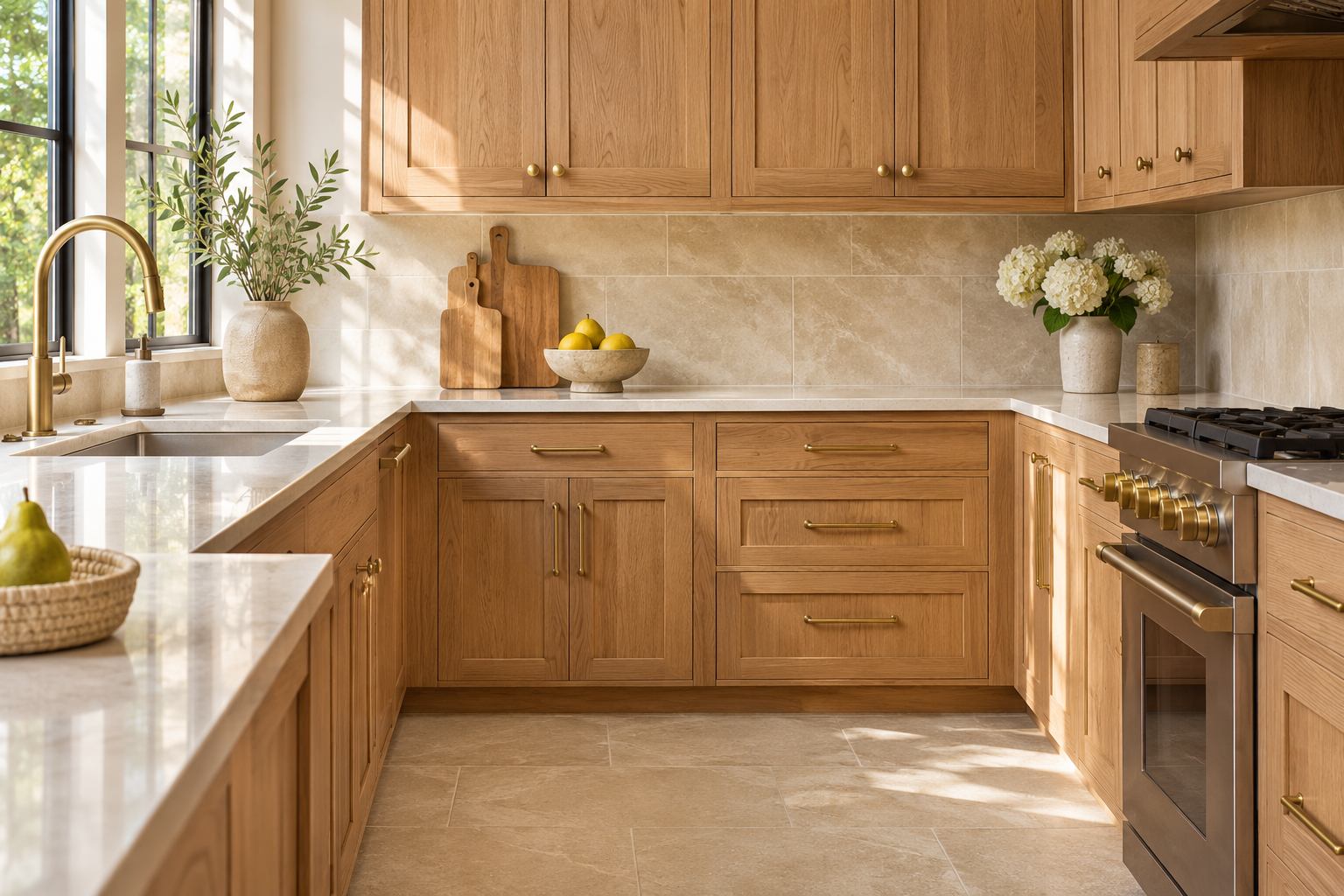
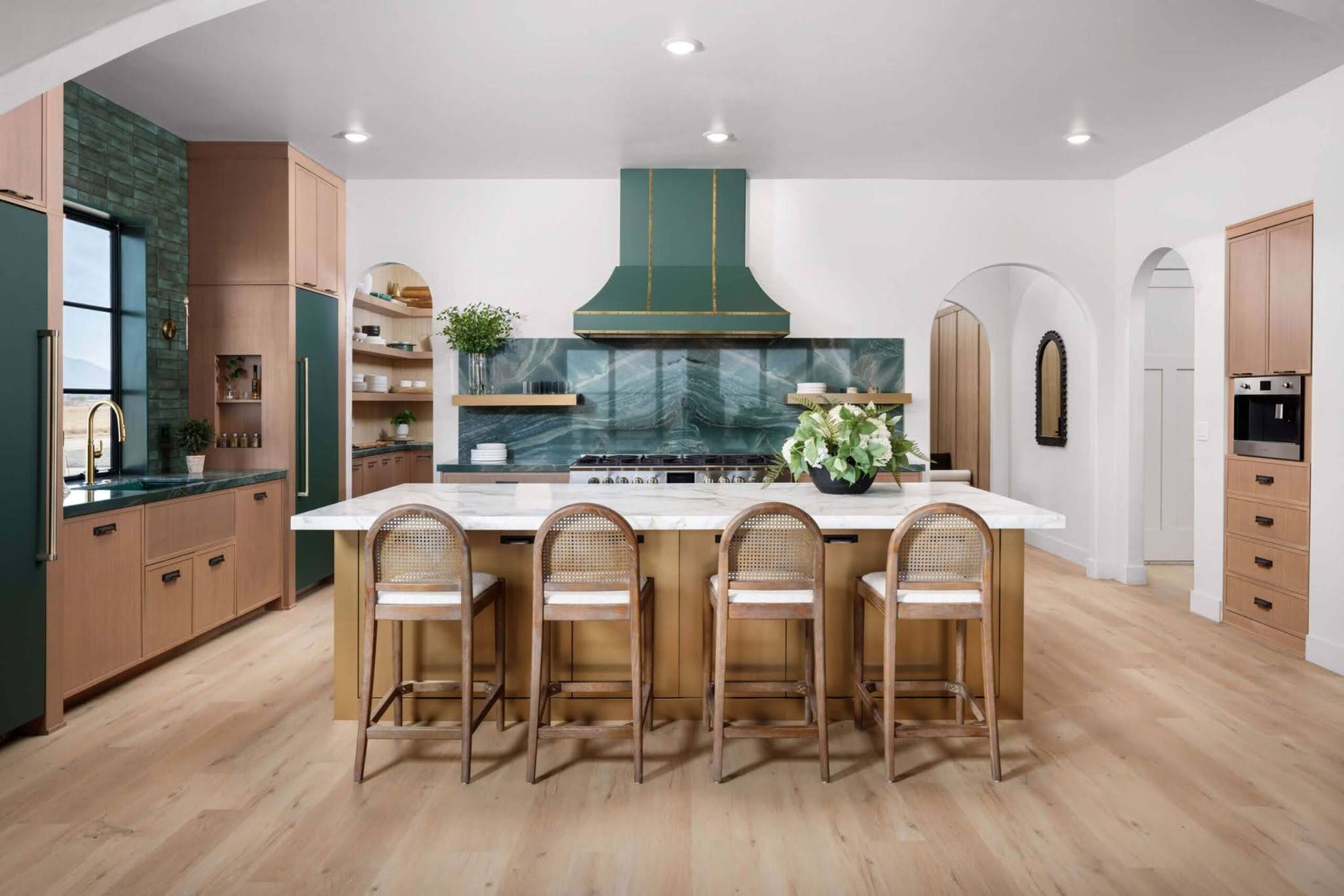
Warm oak cabinetry pairs beautifully with neutral stone-look tile, creating a cohesive look without matching every surface.
2. Decide Whether to Match or Contrast
Complementary doesn't have to mean matching. In fact, trying to match your tile and cabinets too closely can sometimes make a space feel flat or emphasize subtle differences between the materials.
A more tonal approach creates a softer, cohesive look. Think cream cabinets with warm limestone-look porcelain flooring, or sage green cabinetry with a muted gray-green backsplash.
Contrast, on the other hand, helps define different elements in a room. Dark walnut cabinetry can look striking against light stone-look tile, while white cabinets offer a beautiful backdrop for rich greens, blues, or patterned ceramics.
Contrast doesn't have to be dramatic, either. A pale, textured tile against natural wood can provide just enough distinction.
A helpful guideline: If your cabinetry already makes a strong visual statement, consider a quieter tile. If the cabinets are simple and understated, you have more freedom to experiment with color, shape, or pattern.
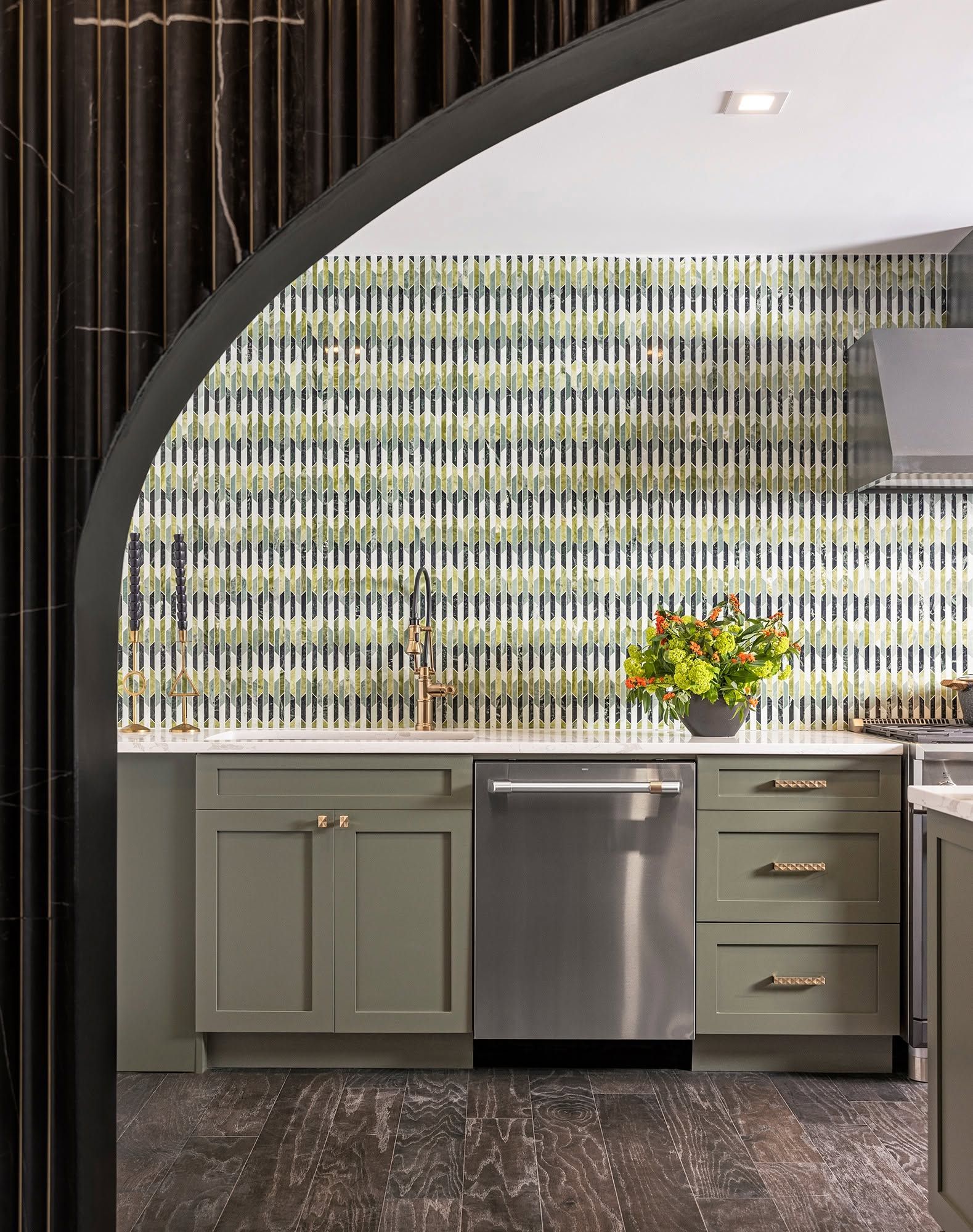
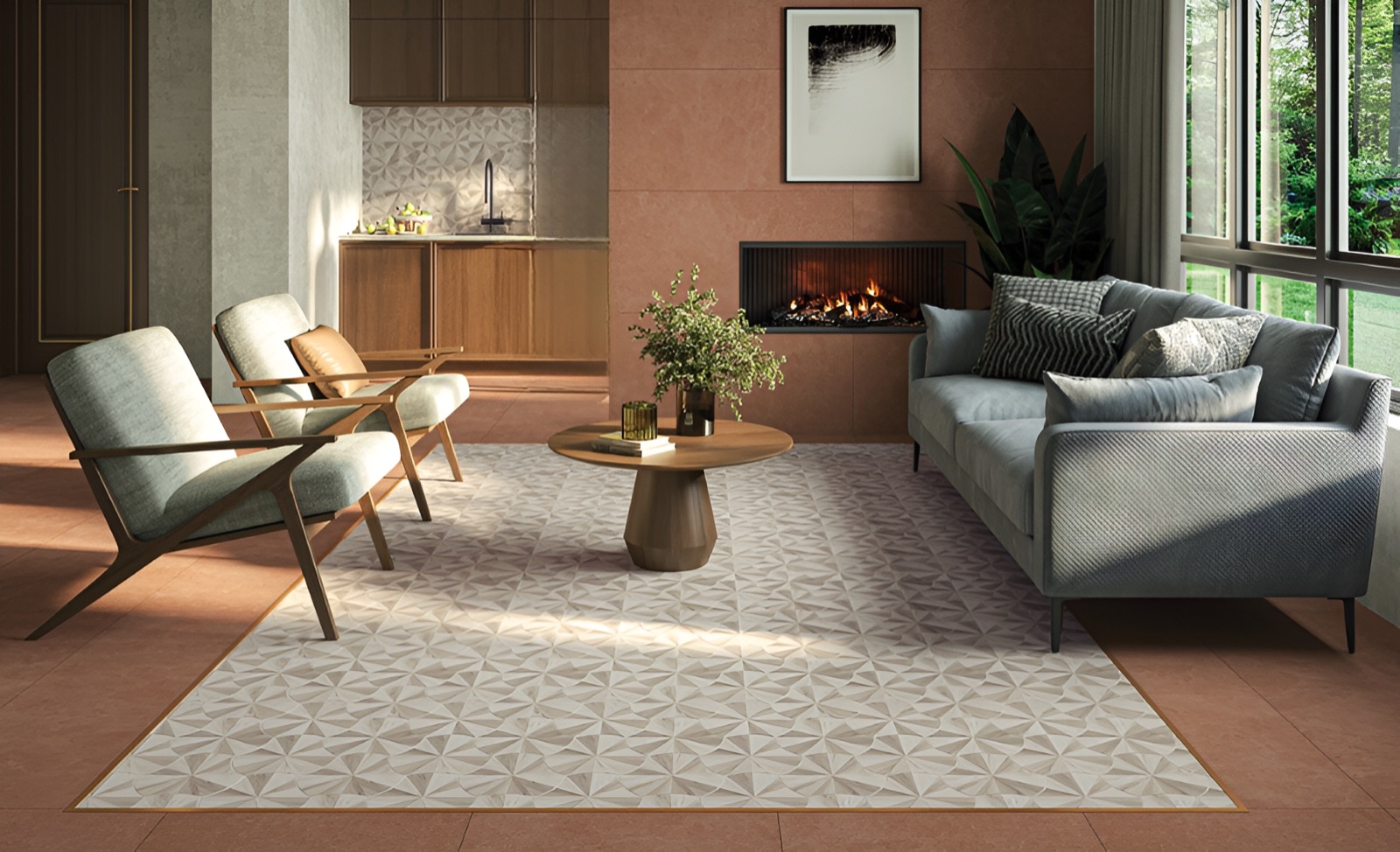
Tappeti Green by Artistic Tile adds pattern and visual interest alongside understated green cabinetry.
3. Find Tile That Works with Your Cabinet Color
Certain combinations are especially helpful starting points when narrowing down your selections.
White and Off-White Cabinets
Warm white cabinetry pairs naturally with ivory ceramic, beige stone looks, and softer neutrals. Brighter whites can work with cooler grays, crisp geometric patterns, or colorful tile.
For an all-white kitchen, consider introducing texture through subtly rippled ceramic or marble-look porcelain to keep the room from feeling too uniform.
Natural Oak and Light Wood Cabinets
Natural wood cabinetry brings warmth and character, making it a great match for cream, warm stone looks, muted greens, and earthy terracotta.
If you're considering wood-look porcelain flooring, avoid choosing a finish that's almost identical to the cabinets. A noticeable difference in tone or grain often creates a more intentional combination.
Dark Wood, Navy, and Charcoal Cabinets
Darker cabinetry pairs beautifully with lighter tile that introduces contrast. Consider warm white ceramics, softly veined marble looks, or light stone-look porcelain.
For a moodier design, darker tile can work just as well. Mixing finishes and textures helps keep the combination interesting, especially in rooms with adequate natural light.
Green and Blue Cabinets
Colored cabinetry offers an opportunity to get creative.
Sage and olive greens work beautifully with warm ivory, natural stone, and clay-inspired tile. Deep blue cabinetry can complement creamy whites, light grays, or subtle marble looks.
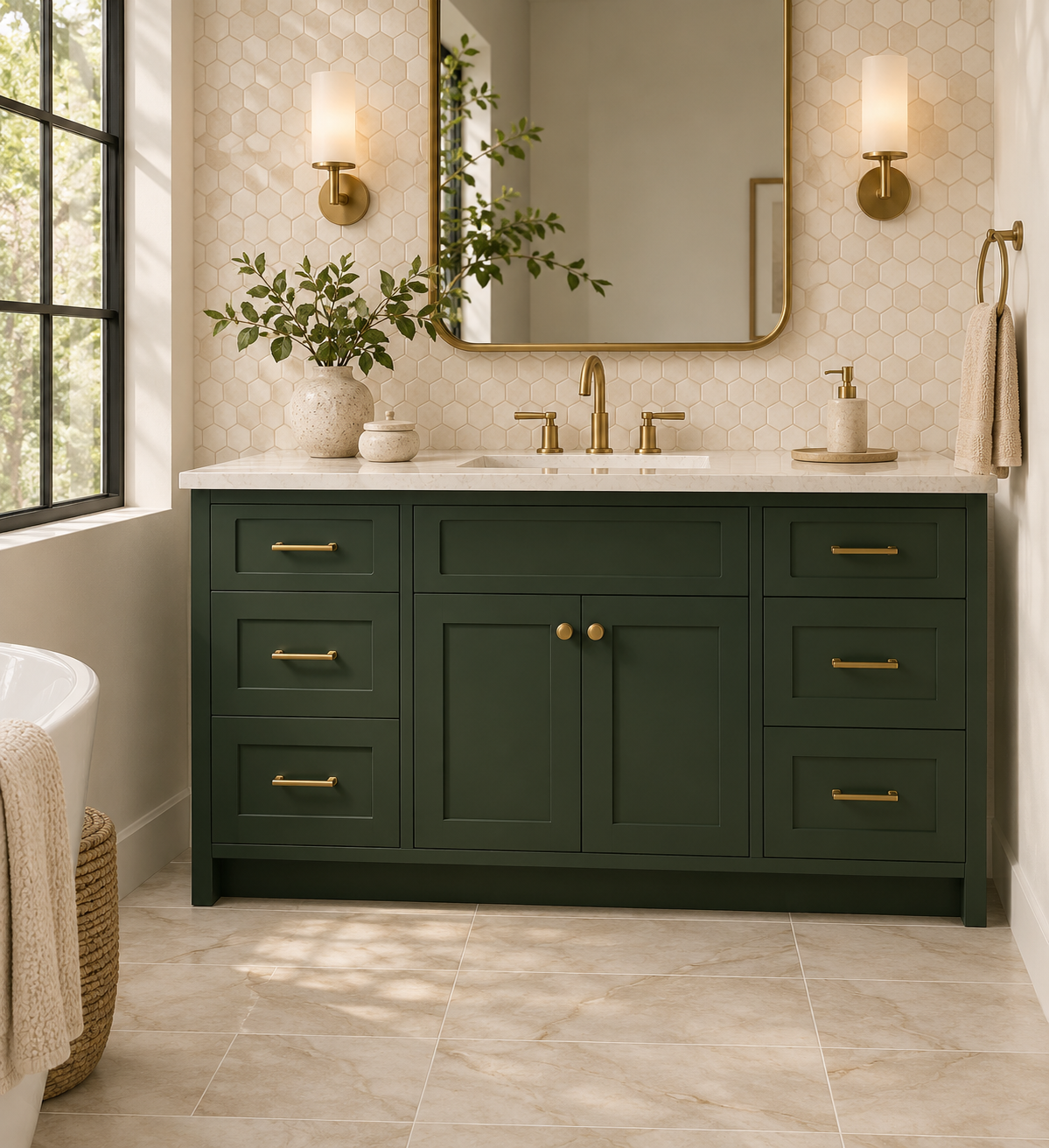
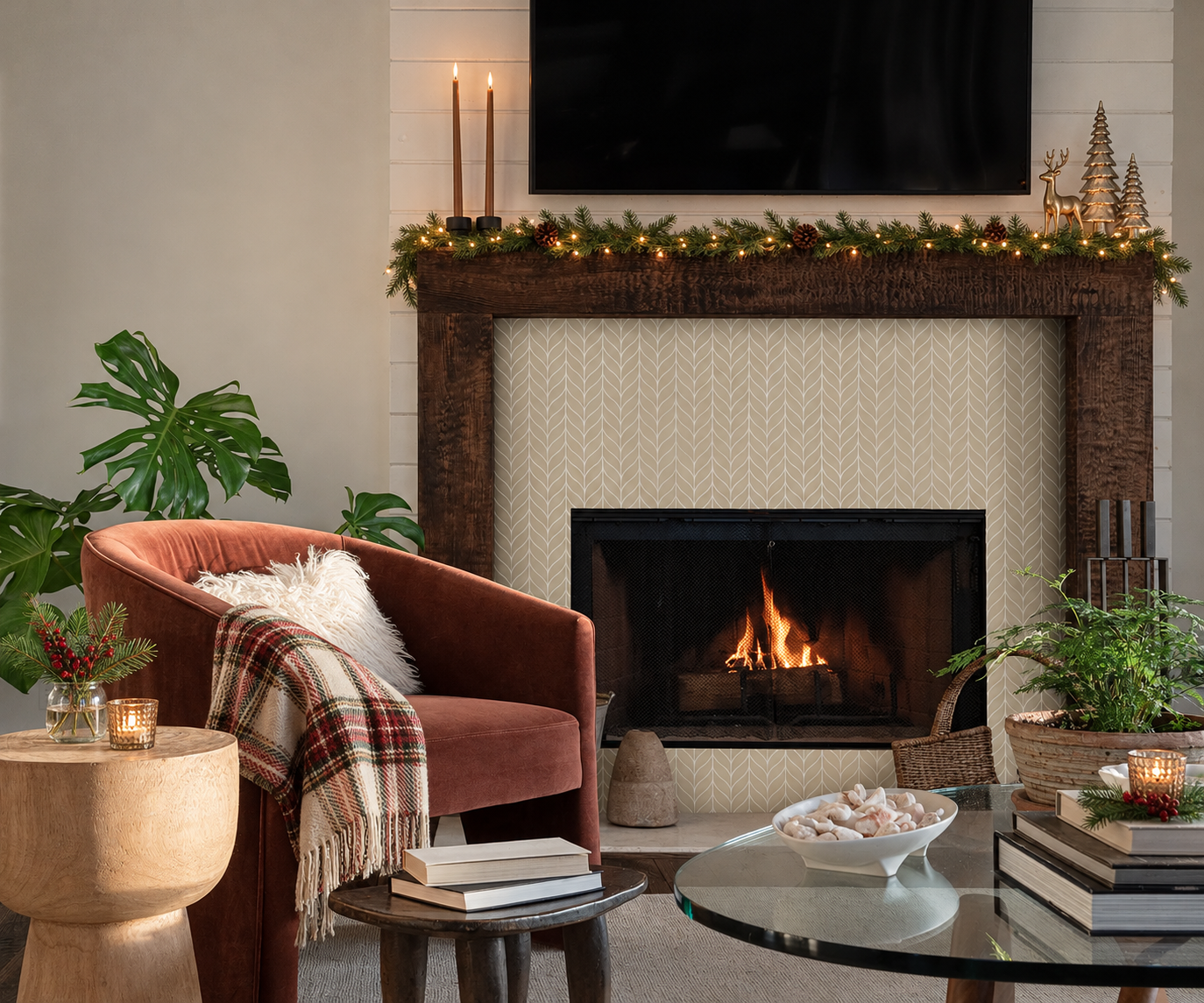
Deep green cabinetry contrasts beautifully with ivory hexagon tile and light stone-look flooring.
Don't feel limited to neutrals. Tonal combinations or carefully chosen accent colors can make the space feel even more personal.
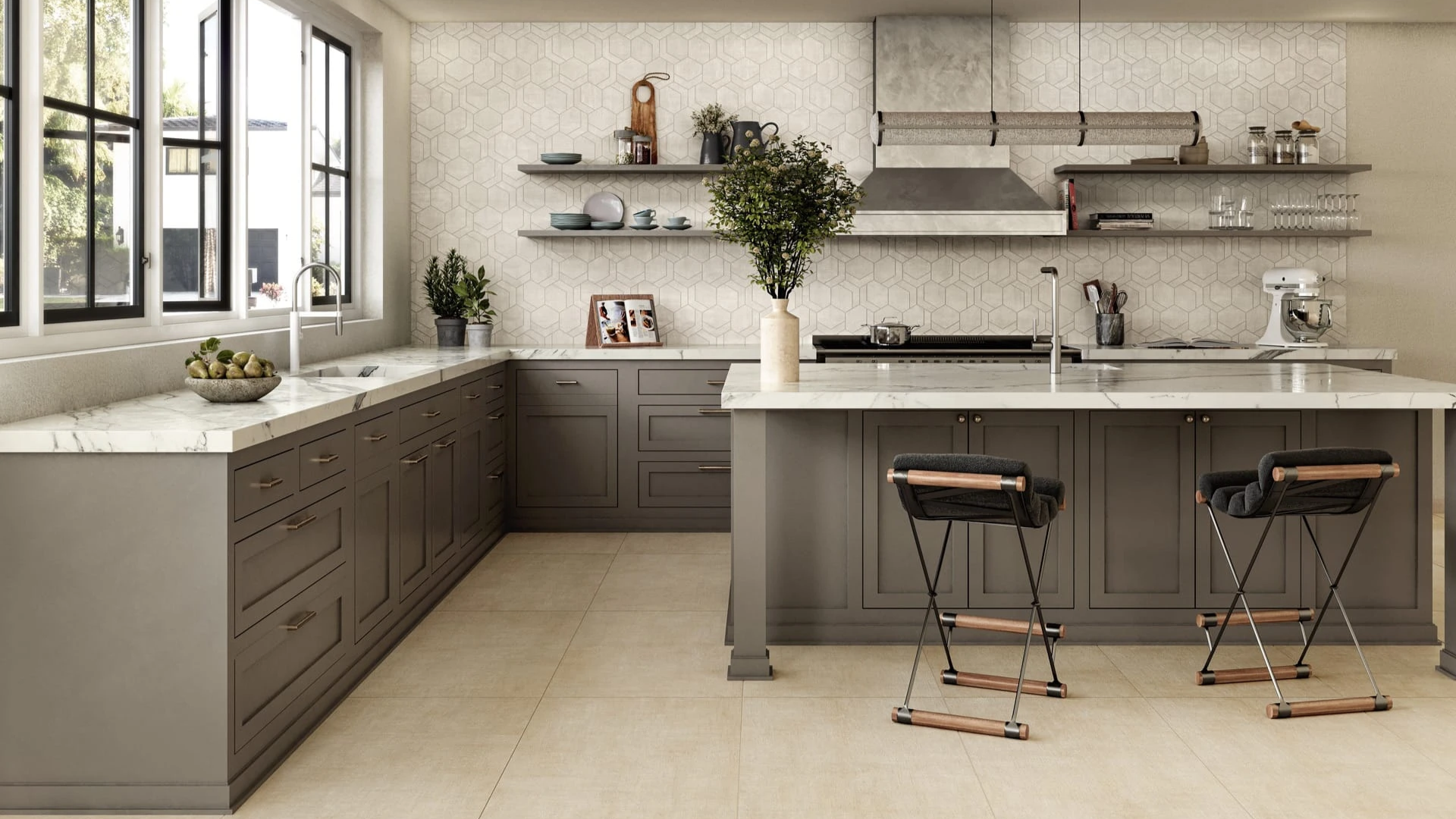
Atlas Concorde USA's Fray Ivory and Fray White Hexmark Mosaic bring subtle texture and tonal variation to this neutral kitchen.
4. Consider the Countertops and Surrounding Materials
Cabinets and tile don't exist in isolation. Countertops, flooring, hardware, and wall color all influence how the finished room comes together.
This is especially important in kitchens, where cabinets, countertops, and backsplash tile meet directly.
A countertop with prominent veining or noticeable variation may benefit from a simpler backsplash. Try pulling a secondary shade from the countertop into your tile selection to create a natural connection.
If the countertop is more understated, there's often room to introduce additional pattern or color.
Try the three-sample test: Place your cabinet, countertop, and tile samples together. Which surface catches your attention first?
If all three are competing to be the focal point, consider simplifying one of them.
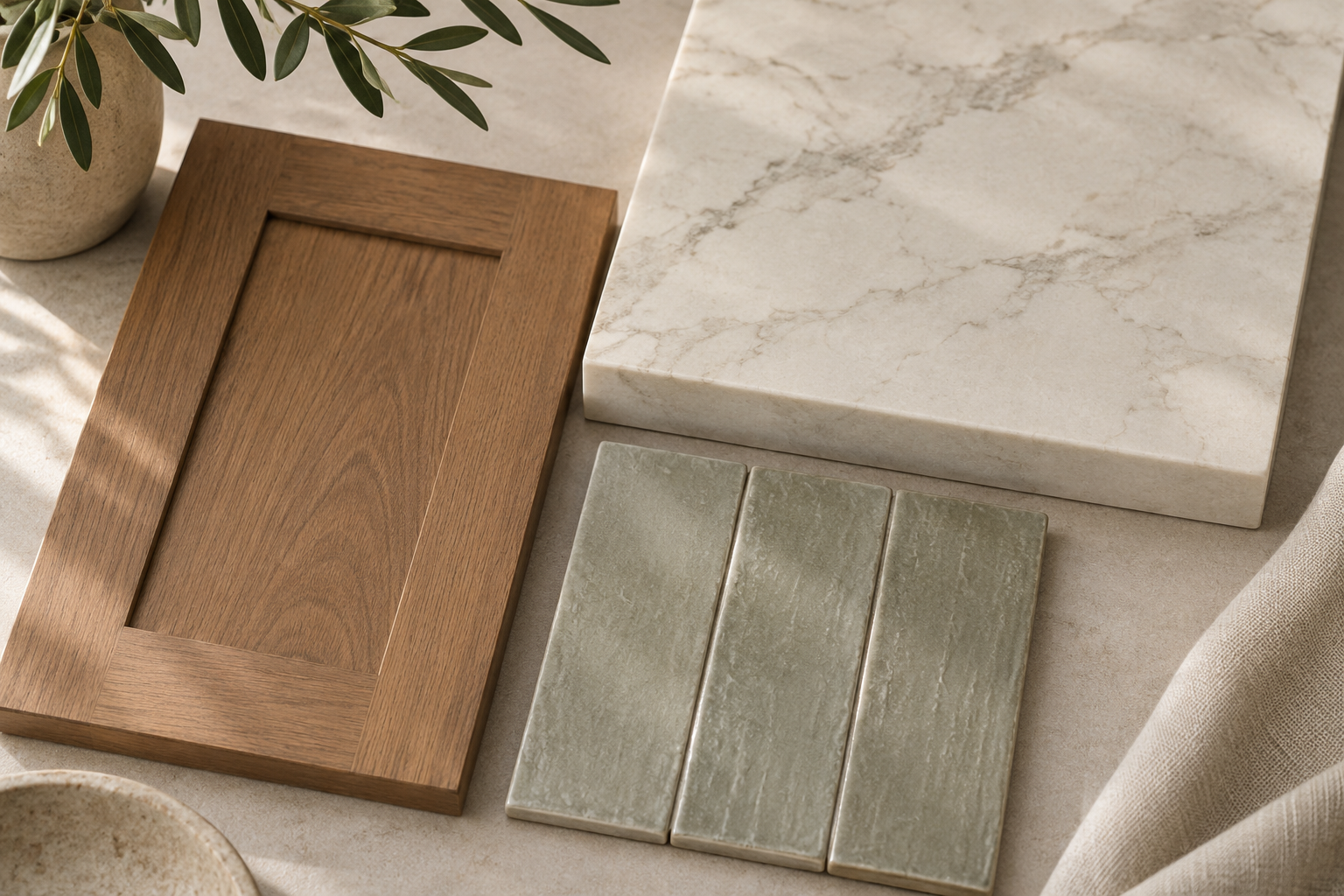
Comparing cabinet, countertop, and tile samples side by side helps reveal how colors, undertones, and textures work together.
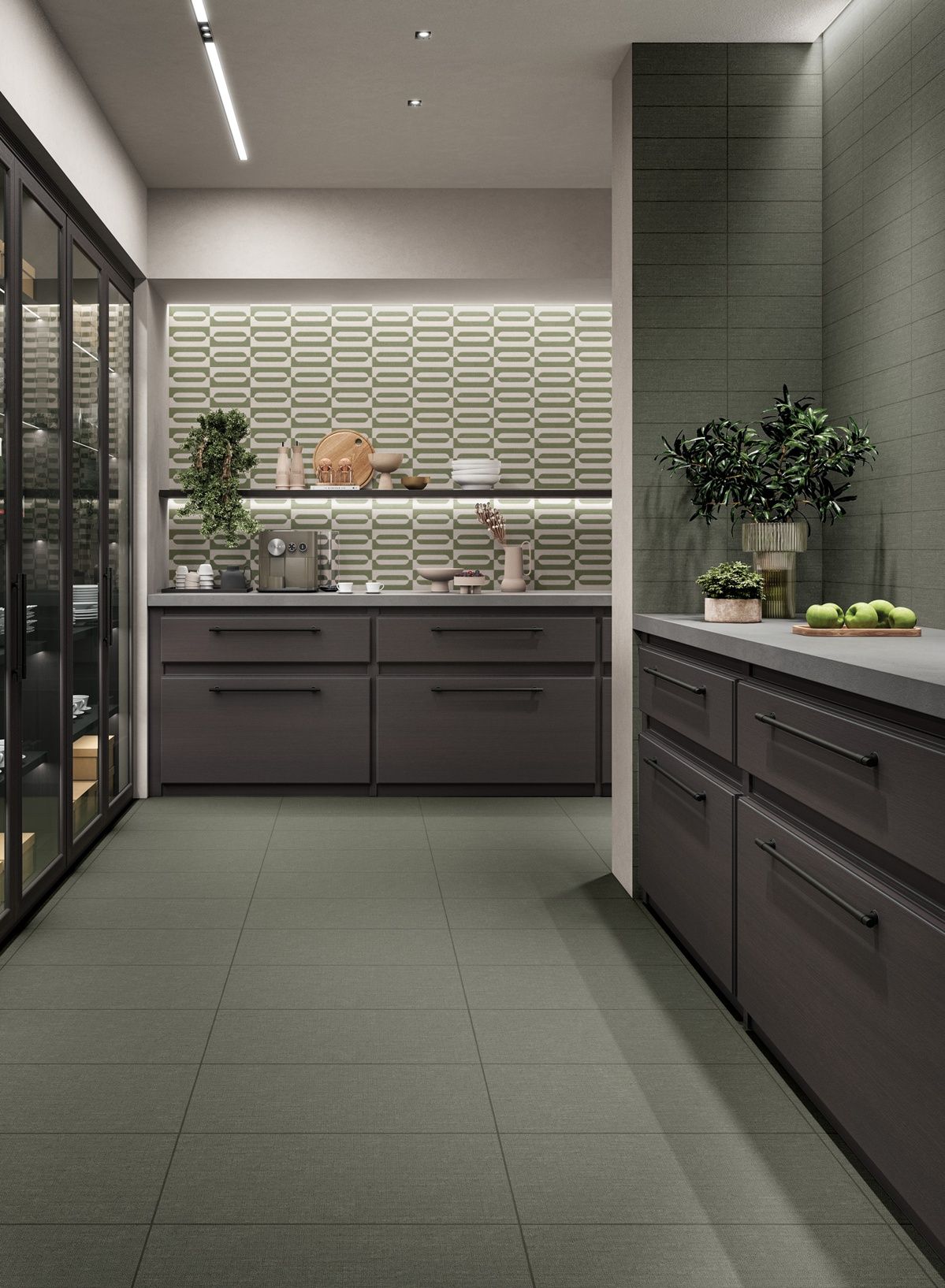
Moss Threadscape by Florida Tile introduces dimensional texture, complemented by streamlined cabinetry and coordinating green tile.
5. Balance Cabinet Details with Tile Size and Pattern
A flat-panel cabinet has a very different visual presence than a traditional raised-panel door or a Shaker-style cabinet.
Cabinetry with decorative detailing, prominent hardware, or strongly defined wood grain often benefits from simpler tile shapes or understated stone looks.
With more streamlined cabinets, tile can introduce welcome character through handmade-look ceramics, dimensional surfaces, or patterned mosaics.
Consider scale, too. Larger-format tile generally creates a more continuous surface with fewer grout lines, while smaller formats and mosaics introduce more visible detail.
Where the tile is going matters, too. A backsplash sits directly against cabinetry, making subtle color differences more noticeable. Floor tile creates a larger visual foundation and needs to coordinate with adjoining rooms.
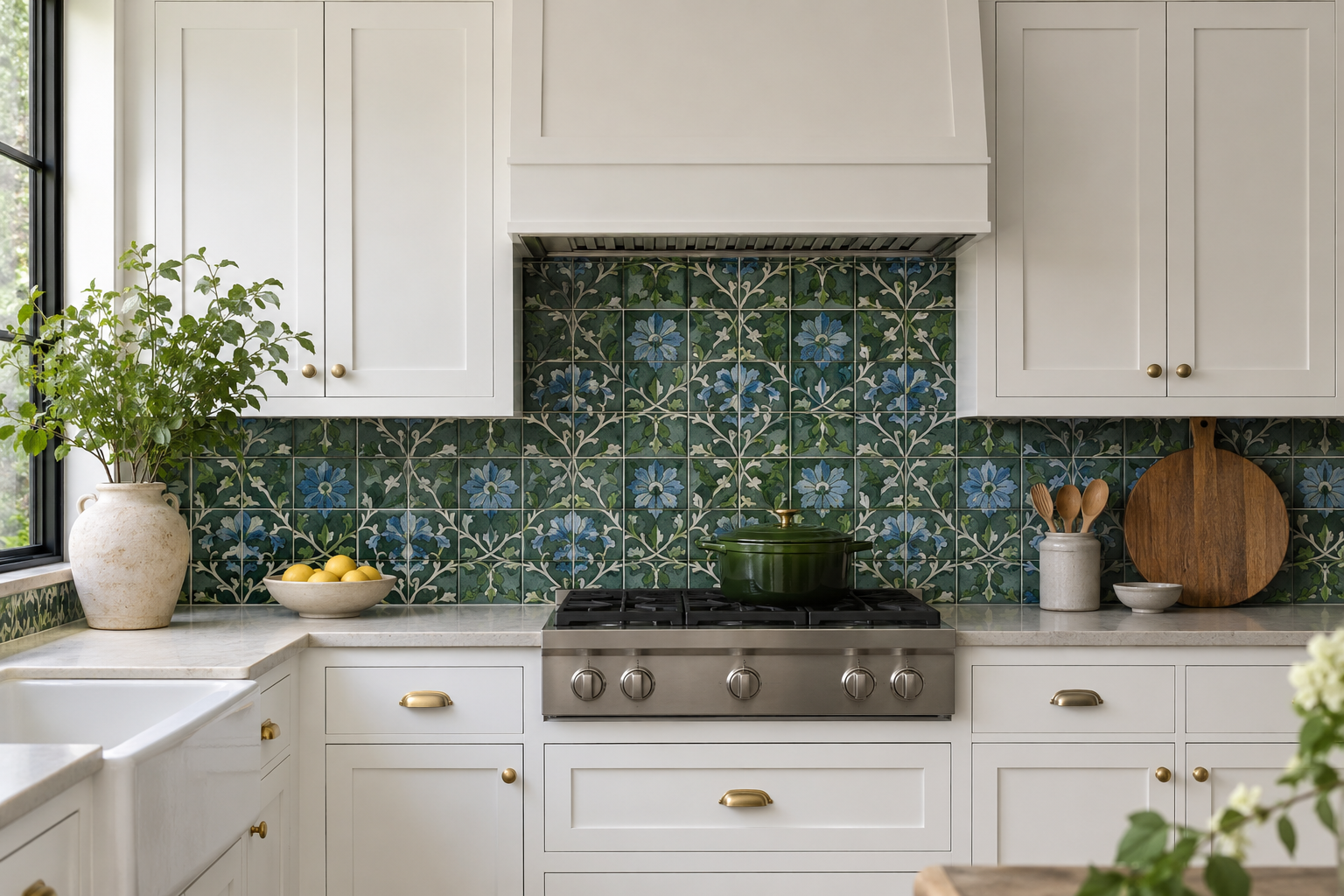
Simple white cabinetry creates the perfect backdrop for a colorful, patterned backsplash that becomes the focal point.
For bathrooms, consider the vanity and shower tile together. Repeating a subtle color or selecting complementary finishes can help connect the two areas without making them identical.
And remember that floor and shower tile must also meet the practical requirements of their intended location, including appropriate moisture and slip resistance.
6. Take Samples Home Before Deciding
Even the most promising showroom combination can look different once you bring it home.
Natural light, overhead fixtures, and under-cabinet lighting can influence how tile and cabinetry appear together. Warm lighting may emphasize yellow or beige undertones, while cooler daylight may bring out gray or blue shades.
Place samples directly beside your cabinets and look at them throughout the day. For flooring, lay samples flat rather than holding them vertically.
Pay attention to grout color, too. Contrasting grout highlights individual tile shapes, while a closely matched color generally creates a softer appearance.
If you're considering natural stone or handmade-look tile, compare several pieces together. A single sample won't always capture the variation of the finished installation.
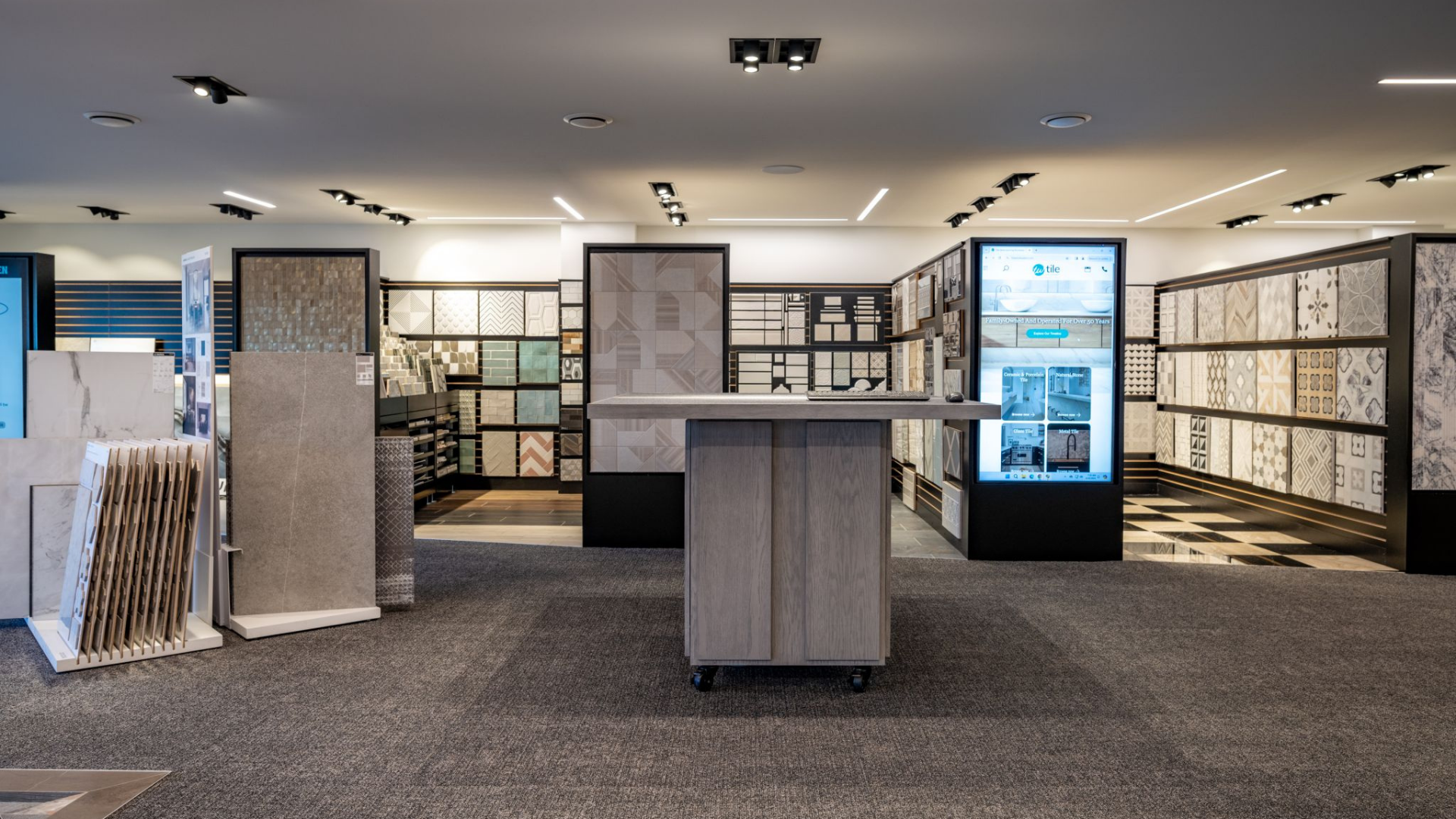
Explore tile in person at Tile Wholesalers of Rochester, where our design team can help you find the right pairing for your space.
Find Your Perfect Tile Pairing at Tile Wholesalers of Rochester
The right tile doesn't need to match your cabinets perfectly. Sometimes the most beautiful combinations come from thoughtful contrast, shared undertones, or an unexpected texture that brings everything together.
At Tile Wholesalers of Rochester, our design team can help you explore those possibilities in person. Whether you're updating tile around existing cabinetry or planning a kitchen or bathroom from scratch, we'll help you find materials that work beautifully together.
Bring your cabinet samples, countertop pieces, or project photos to our showroom. Explore our tile collections, take home free full-size samples, and get personalized guidance through a complimentary design consultation.
Visit Tile Wholesalers of Rochester to get started.
Ready to See These Materials in Person?
Book a free consultation and let us help you choose the right tile for your project.
Book Appointment