


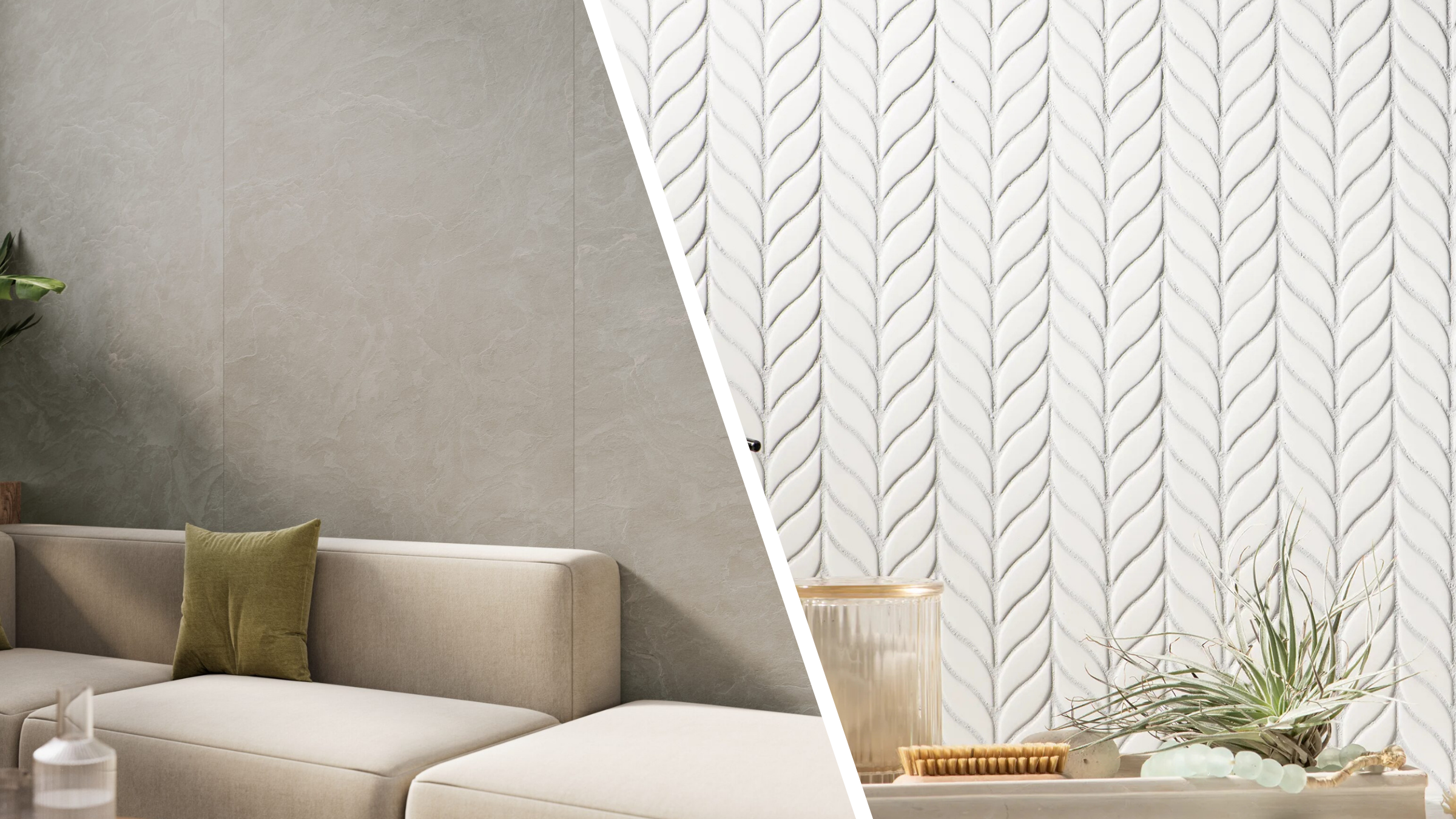
Choosing tile often starts with color, pattern, or finish, but size can make just as much of an impact on how a space feels.
A large-format tile can create a cleaner, more open look with fewer grout lines, while a smaller tile can add texture, movement, and detail in a way that feels more custom.
One is not necessarily better than the other. It really comes down to the room, the layout, and the feeling you want the space to have when everything comes together.
In our showroom, we see this decision come up often. A homeowner might love the seamless look of a large stone-inspired porcelain tile for a bathroom floor, but still want the charm of a smaller mosaic in the shower. Someone else might be drawn to a handmade-look backsplash tile because it adds just enough variation and personality to a kitchen without overwhelming the room.
Variety of scale is great because it gives you options. Large-format tile can help a room feel calm and expansive. Small-format tile can bring in pattern, texture, or a more crafted look. And in many projects, the best design comes from using both in the right places.
Here’s a closer look at how large-format and small-format tile differ, where each one works best, and how to choose the right scale for your space.
What Counts as Large Format or Small Format Tile?
Tile format simply refers to the size and shape of the tile, and it can have a big impact on the overall feel of a room.
Large-format tile generally starts around 12x24 and goes up from there, including popular sizes like 24x24 and 24x48. These larger sizes are often used when you want a cleaner, more continuous look with fewer grout lines.
Small-format tile includes mosaics, subway tile, smaller squares, hexagons, pickets, and other decorative shapes. These are often used when you want to bring in more detail, texture, pattern, or movement.
In the showroom, this is much easier to see in person. Looking at different formats side by side helps you understand how much scale can change the look of a tile — and how it might feel in your own space.
One thing we often remind homeowners is that tile can feel very different once it's installed than it does on a sample board. A tile size that feels perfect in the showroom may feel larger or smaller once it's installed across an entire floor, shower, or backsplash.
That's why we encourage customers to take advantage of our free full-size samples. Seeing different sizes and styles in your own home can help you visualize the finished space and feel more confident in your decision.
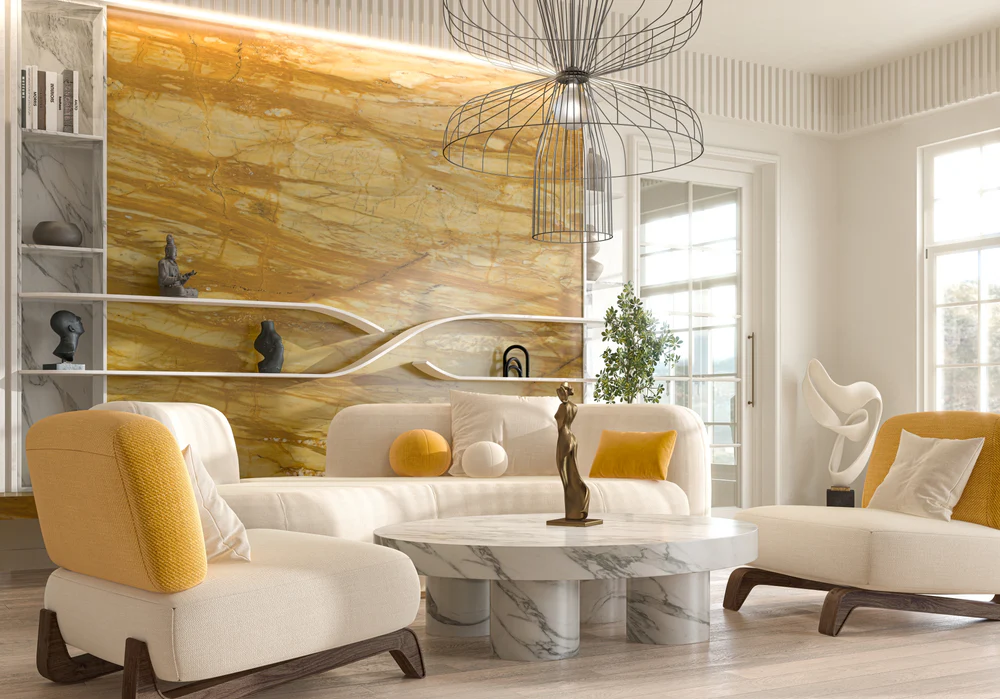
Artistic Tile’s Giallo Siena Marble Slab
The Case for Large-Format Tile
Larger tiles can help a room feel less busy.
On a bathroom floor, it can create a spa-like feel. On shower walls, it can make the space feel taller and more open. In a kitchen or main living area, it can help create a more consistent flow from one space to the next.
In the showroom, we carry large-format options from manufacturers like Artistic Tile and Crossville Tile, both of which show how versatile larger-scale surfaces can be.
Artistic Tile’s stone slab options can bring natural movement and richness to floors, walls, backsplashes, fireplace surrounds, and other statement areas, while Crossville’s porcelain panel collections offer a clean, expansive look that works beautifully for walls, showers, and feature surfaces.
And while large-format tile is often associated with modern design, it does not have to feel cold or minimal. Many of the large-format options we carry have warmth, movement, and natural variation.
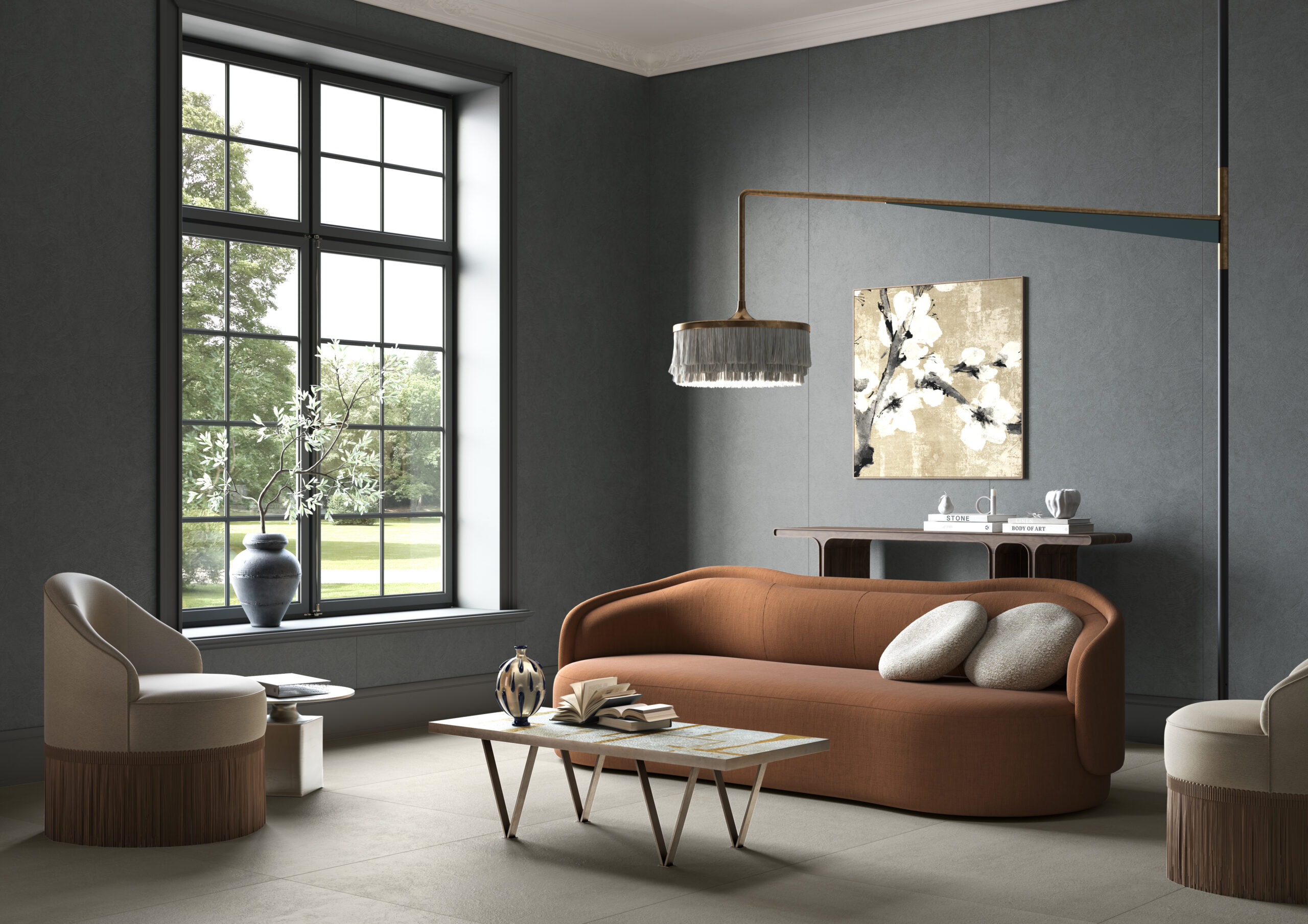
Crossville’s Gemini
Best Uses for Large-Format Tile
Large-format tile is a strong choice for:
Bathroom floors and shower walls
Kitchen floors
Open-concept living areas
Mudrooms and entryways
Fireplace surrounds
Feature walls
Spaces where you want a cleaner, more continuous look
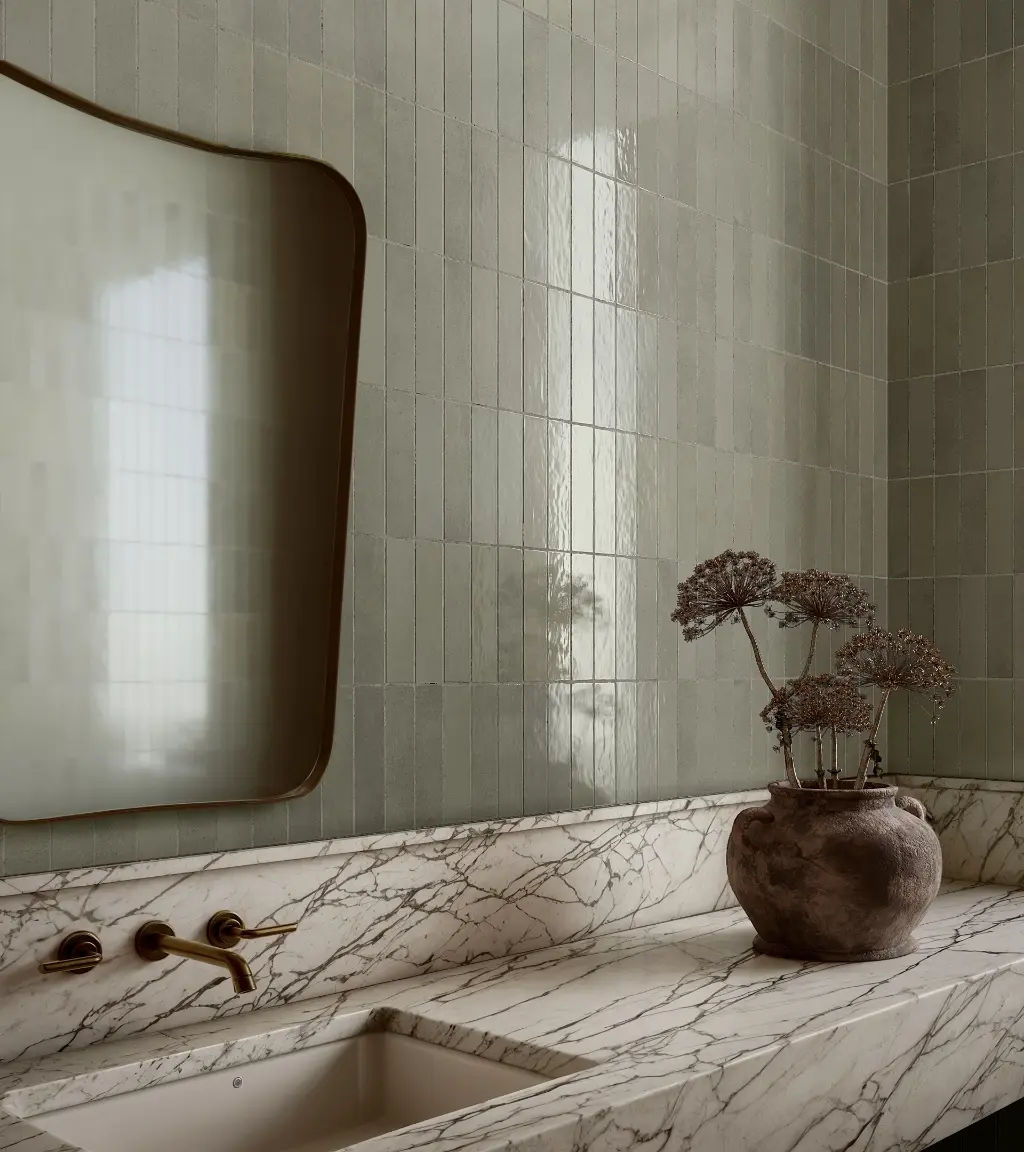
Althea Ceramic’s Sky Green Cottage Ivy
The Case for Small-Format Tile
Small-format tile brings a different kind of impact. Instead of creating a cleaner, more continuous surface, it often adds rhythm, texture, pattern, or detail.
Smaller tile gives you more opportunities to play with layout, too. A simple subway tile can feel completely different depending on whether it is installed in a traditional running bond, stacked vertically, or set in a herringbone pattern. A mosaic can add softness, movement, or a more decorative feel, depending on the shape and material.
In the showroom, we carry small-format options from manufacturers like Altea Ceramics and Sonoma Tilemakers, both of which show how much personality smaller tile can bring to a room. Altea Ceramics focuses on small-format tile designed to be mixed, coordinated, and layered through shape, tone, texture, and color. Sonoma Tilemakers’ Hustle collection brings a different kind of energy, with small-scale glass tile that can feel clean and classic in softer colors or bold and playful in more saturated tones.
We see small-format tile used especially well in spaces where a little detail goes a long way. A backsplash, shower niche, laundry room floor, or powder room wall can become a memorable design moment without taking over the rest of the home.
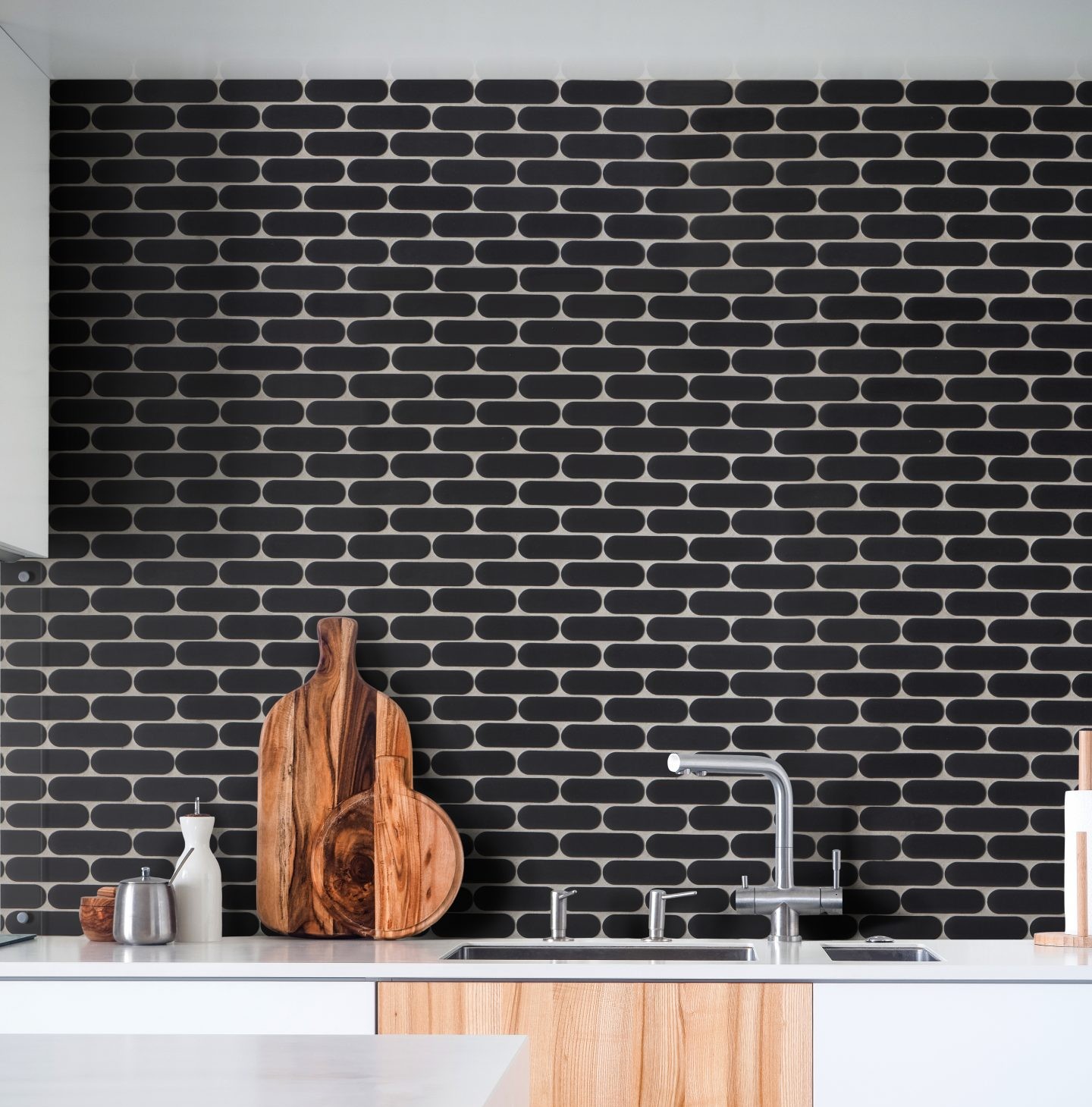
Sonoma Tilemakers’ Hustle Jive in Night Fever
Best Uses for Small-Format Tile
Small-format tile works beautifully in:
Kitchen backsplashes
Bathroom backsplashes
Shower floors
Shower niches
Powder rooms
Laundry rooms
Fireplace details
Accent walls
Borders or decorative insets
How Tile Size Changes the Feel of a Room
Tile size has a big influence on the overall mood of a space. Even when the color or finish is fairly simple, the format can change whether the room feels open, detailed and textured, or somewhere in between.
For a Cleaner, More Open Feel
Large-format tile is often the better fit when the goal is to make a room feel spacious and uninterrupted. With fewer grout lines, it lets the surface feel more continuous, which can be especially effective in open floor plans, primary bathrooms, shower walls, and spaces where you want the material itself to be the focus.
For More Texture and Personality
Small-format tile is a great choice when you want the tile to become more of a design feature. It can add movement to a backsplash, charm to a bathroom, or a little personality to a smaller space like a powder room, laundry room, or shower niche.
For a Balanced Look
You do not always have to choose one or the other. Many projects use both. For example, a bathroom might use large-format tile on the main shower walls and a smaller mosaic on the shower floor or niche. A kitchen might use large-format floor tile to keep the room feeling open, then add a smaller backsplash tile for detail at eye level.
Large and Small Format Tile Can Work Together
Some of the strongest tile designs use scale as a way to create contrast. Large-format tile can keep the main surfaces feeling clean and open, while smaller tile can add texture, pattern, or a more personal detail in the right places.
This approach works especially well when you want a space to feel layered, but not busy. In the showroom, we often pull large and small formats together so you can see how the scale, finish, color, and texture work side by side before making a final decision.
Pairing Ideas
Large-format bathroom floor with a small mosaic shower floor
Large-format shower walls with a smaller niche accent
Large-format kitchen floor with a handmade-look backsplash
Large-format fireplace surround with a smaller hearth detail
Small-format powder room wall tile with a simple large-format floor tile

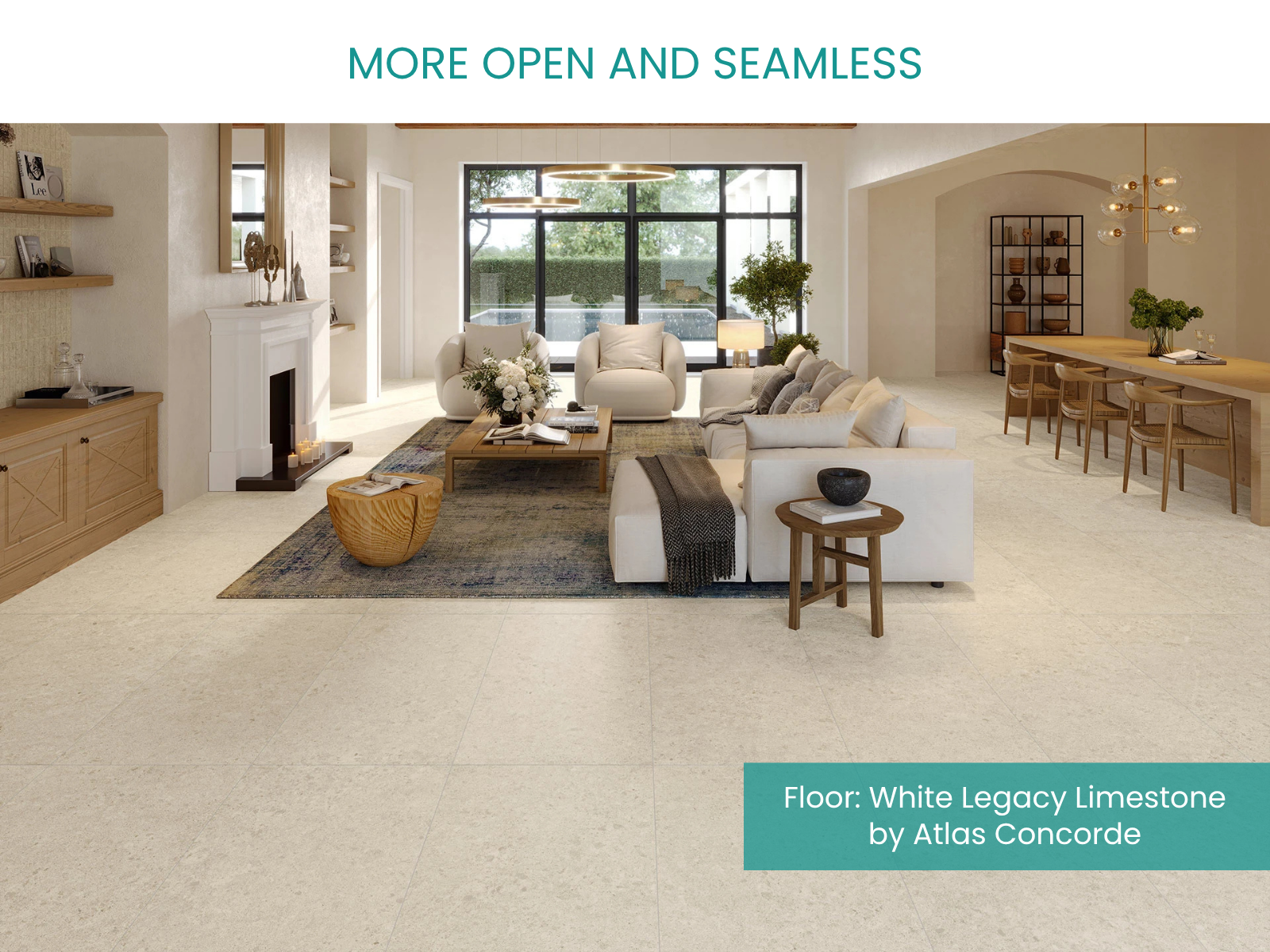
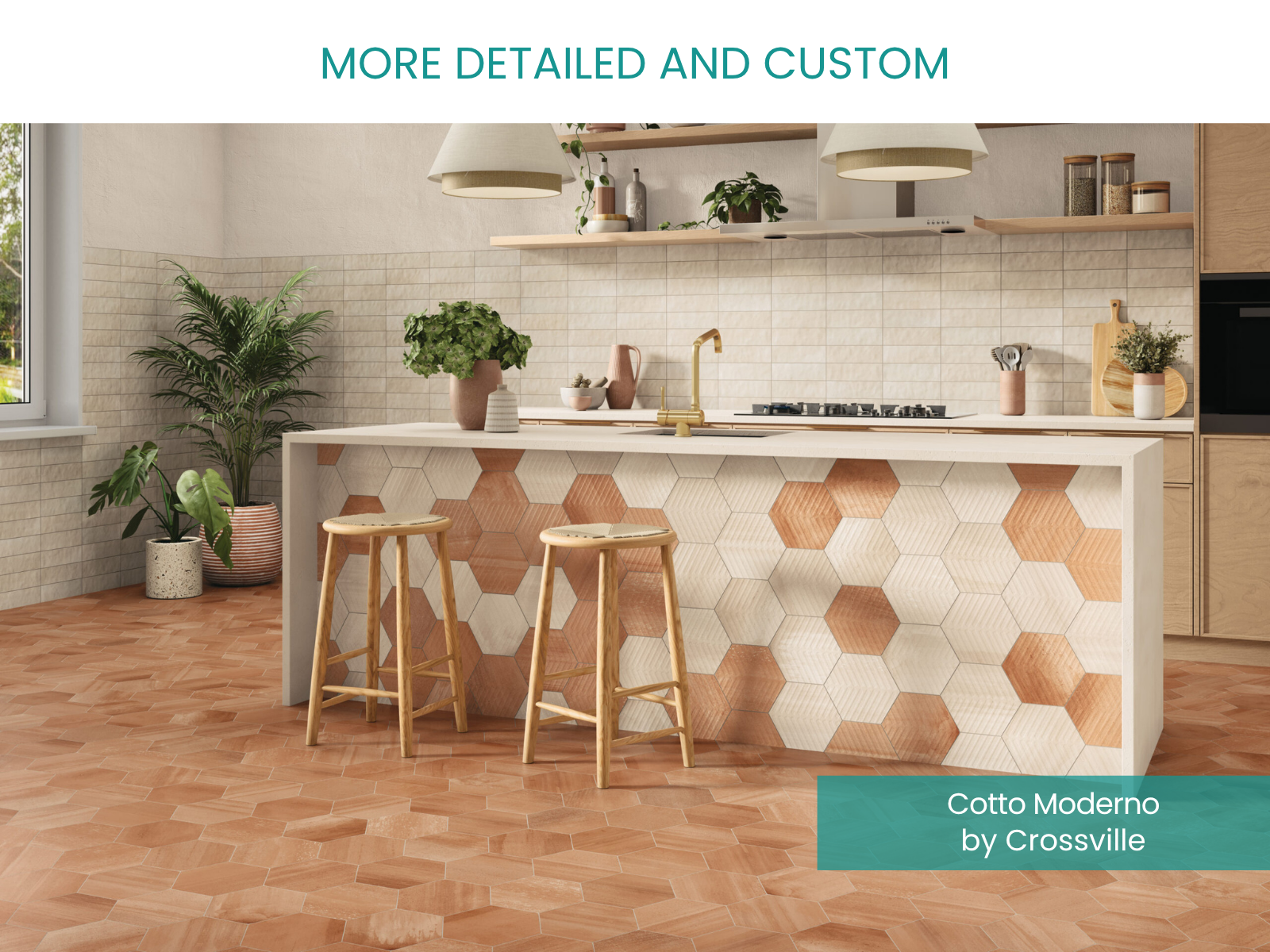
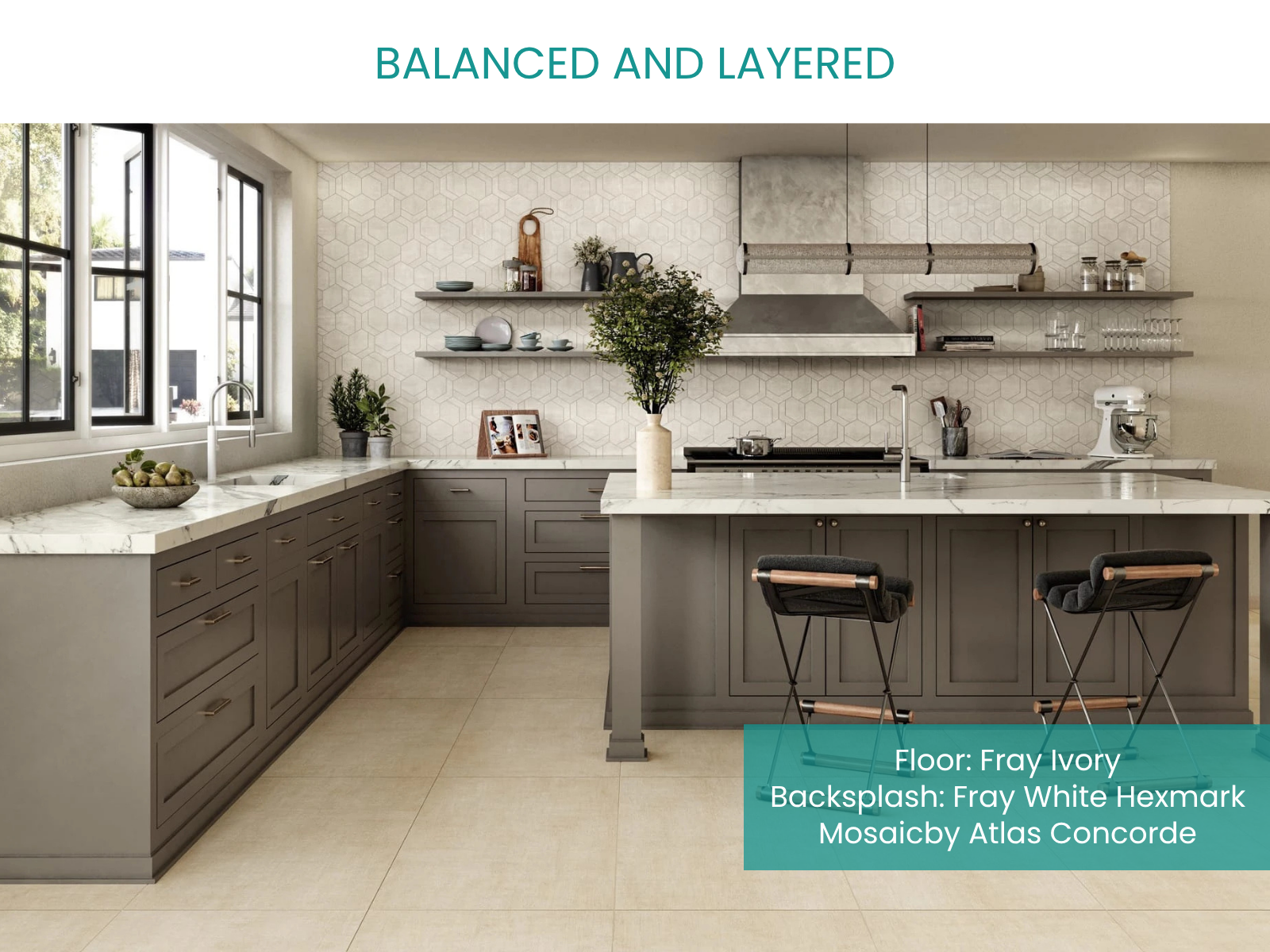
Final Thoughts: Let the Space Lead the Decision
The best tile format is the one that supports the way the room is meant to look, feel, and function. In some spaces, that means using larger tile to keep the design clean and open. In others, it means choosing a smaller format to add detail, texture, or a more handcrafted feel.
It also depends on where the tile is going. A shower wall, kitchen backsplash, bathroom floor, fireplace surround, and laundry room all have different design needs. Thinking through scale early can help the finished space feel more intentional — not just beautiful in a sample, but right for the room as a whole.
If you are planning a bathroom renovation, kitchen update, fireplace surround, or new build, visiting the showroom can help you compare formats in person and see how different sizes work together.
Visit Tile Wholesalers of Rochester to explore large-format and small-format tile options and find the right fit for your next project.


