


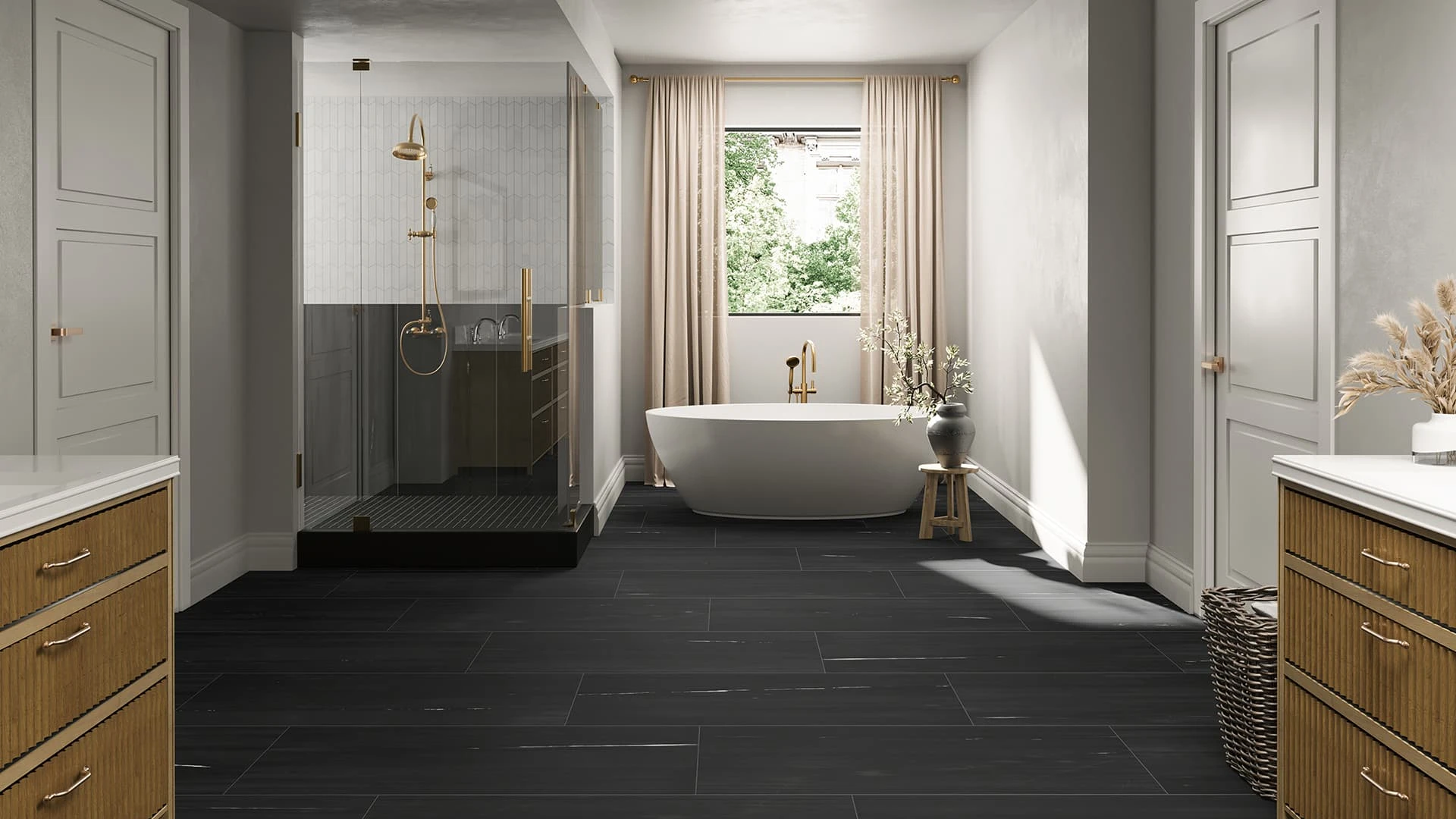
“April showers” usually bring May flowers—but they can also be a good excuse to think about another kind of shower: the one you use every day. If yours is starting to feel a little dated, worn, or just not quite your style anymore, we’ve got you covered.
In many bathrooms, the shower becomes the focal point, whether intended or not. With the right tile, it can shift from purely functional to something that feels more expressive and intentional. From classic, understated looks to more textured or statement-making designs, tile plays a big role in how your entire bathroom space comes together.
Of course, it’s not just about appearance. By selecting the right material, you can help prevent and protect against moisture, support long-term durability, and make ongoing care and maintenance more manageable. Keep reading for a few of our favorite shower tile looks from our manufacturers, along with practical guidance to help you choose materials that perform just as well as they look.
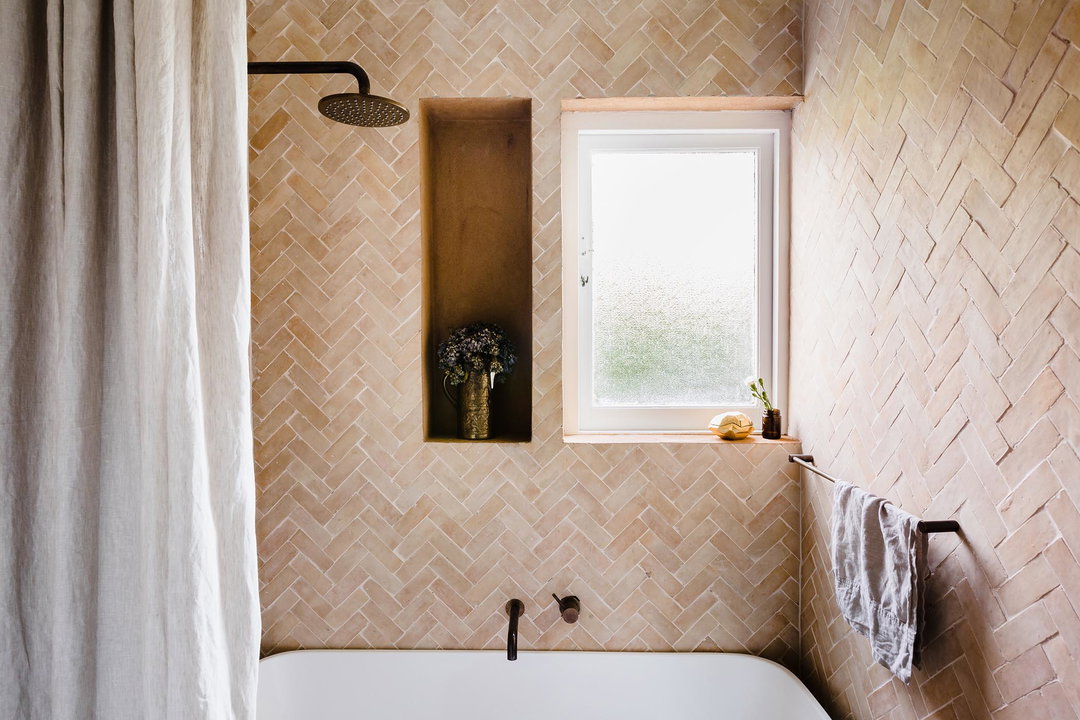
Thin Clay Bejmat by Tiles of Ezra
A Softer, Handmade Look with Natural Variation
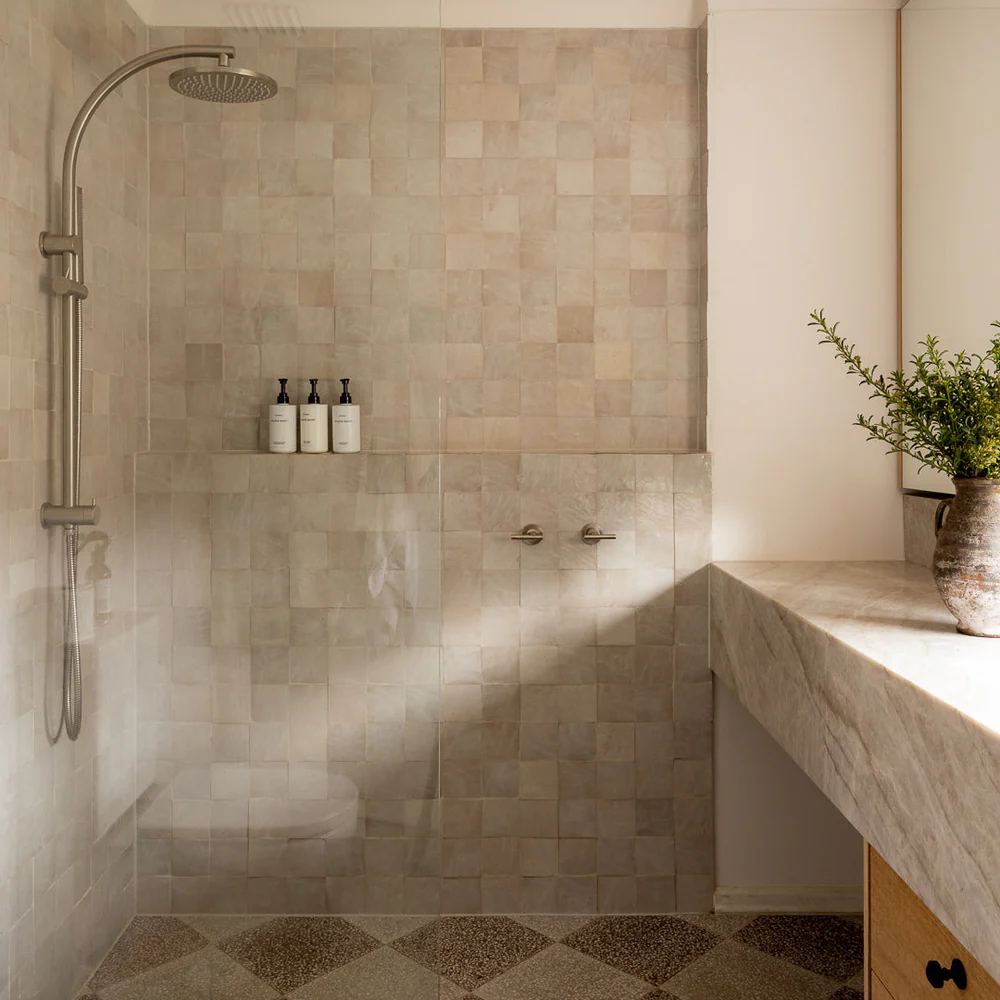
One of the looks we continue to see homeowners gravitate toward is tile that feels a little less uniform and a bit more lived-in. Handmade-style tiles, like Zellige or other artisanal finishes, bring subtle variation in color, texture, and sheen that adds movement without overwhelming the space.
We’ve seen this style used beautifully in showers where the goal is to keep things neutral, but not flat. A simple color palette—soft whites, warm creams, or muted earth tones—paired with that natural variation creates a surface that feels layered and intentional, even without bold pattern or contrast.
This is something we often see in collections from Tiles of Ezra, where the focus is on authentic materials and craftsmanship. Their tiles are known for slight imperfections and tonal shifts that give each installation a one-of-a-kind feel.
From a practical standpoint, these tiles also work well in shower applications. The variation helps disguise water spots and everyday wear, making them a forgiving choice for a space that’s in constant use.
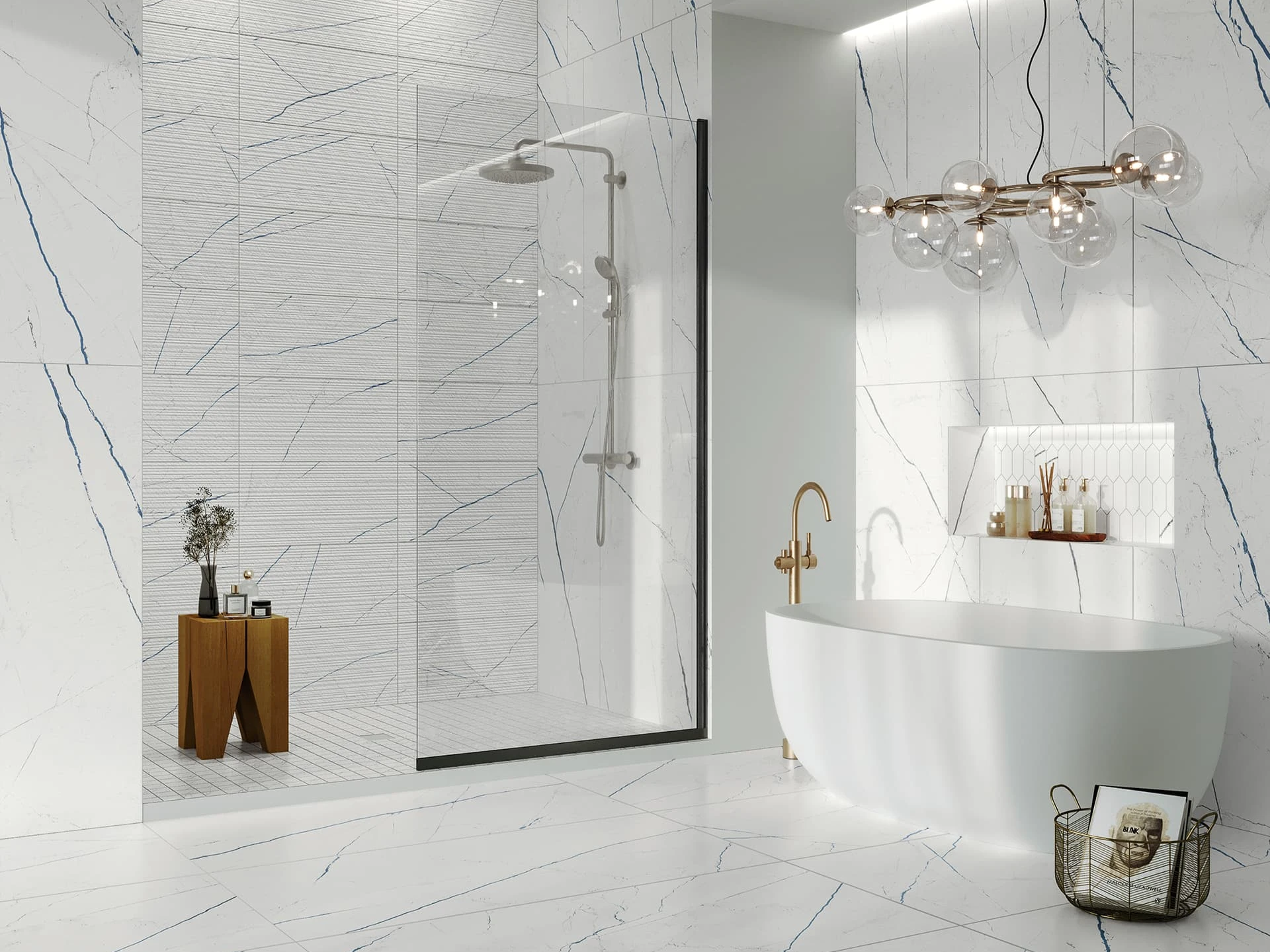
Beyond Calcatta Ocean White by Atlas Concorde
A Polished, Elevated Look with Marble-Look Porcelain
For a more refined, high-end look, marble-inspired porcelain continues to be a go-to—especially in shower spaces. It brings in the elegance of natural stone, but with a bit more consistency and a lot less maintenance.
We often see this style used to create a clean, seamless feel, especially with larger format tiles. Fewer grout lines help the space feel more open, and allow the veining in the tile to stand out and flow in a more intentional way. It’s a look that feels polished without being overly formal.
This is something you’ll find across collections from Atlas Concorde, where marble-look porcelain is designed to closely replicate the movement, depth, and variation of natural marble. At the same time, it offers the durability and performance of porcelain—resisting moisture, stains, and everyday wear while remaining easy to clean.
Another advantage, especially in a shower setting, is the ability to use larger slabs or tiles. Not only does this create a more streamlined look, but it also reduces the number of joints where water, soap, and buildup can collect over time.
For homeowners looking to achieve a more elevated, spa-like feel without the upkeep that comes with natural stone, marble-look porcelain is a strong, practical choice.
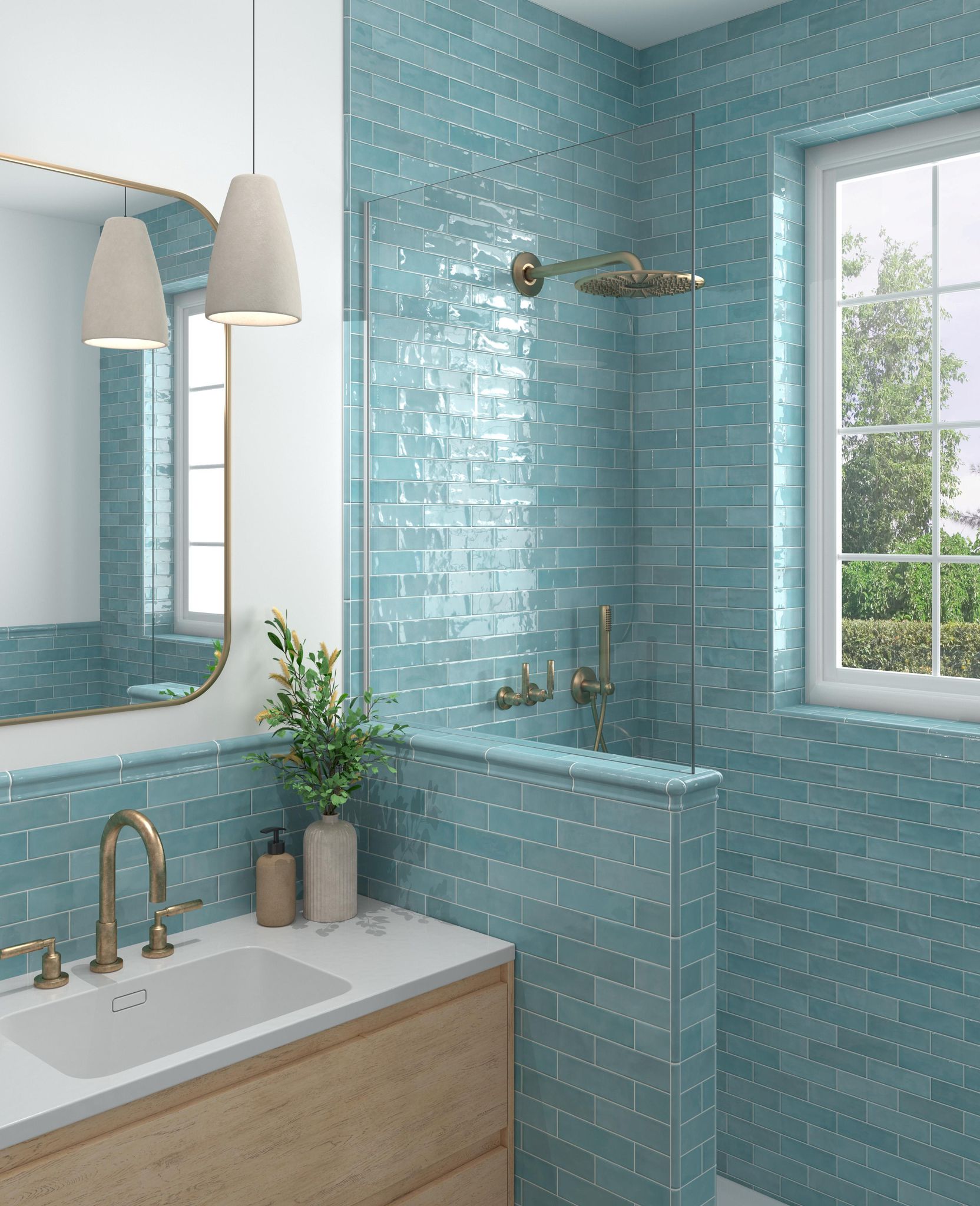
A Bit of Pattern, Used with Intention
One of the biggest takeaways we’ve been seeing across the lines we carry is a clear shift toward texture and pattern, often working together rather than separately.
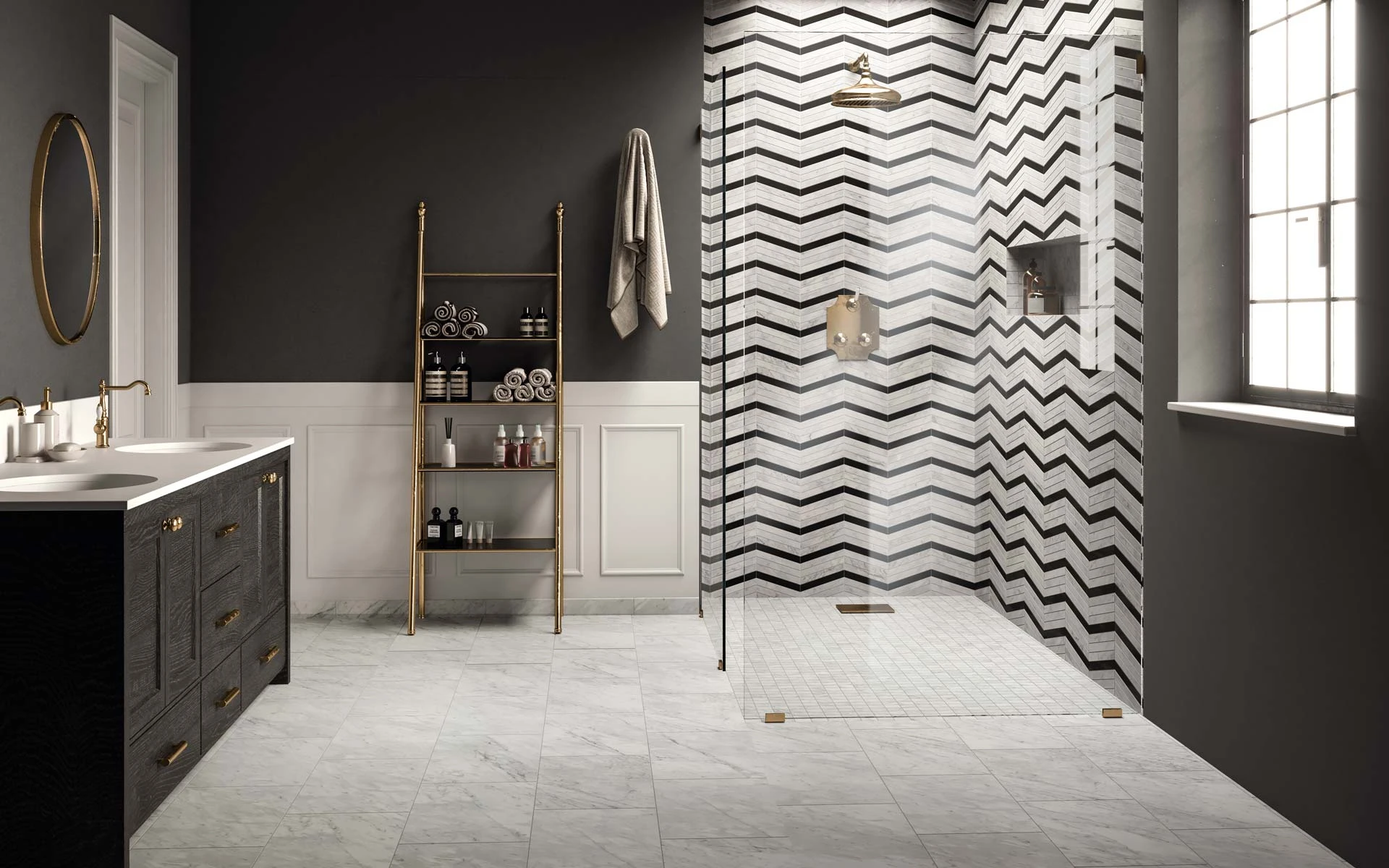
Materials like multi-color mosaics, vein-cut and cross-cut travertine, and even large-format panels all bring their own kind of movement to a space. Instead of flat, uniform surfaces, there’s more interest built directly into the tile, whether through subtle veining, directional cuts, or a slightly varied finish.
At the same time, there’s been more openness to layering in pattern where it makes sense. Not necessarily across the entire shower, but in more intentional moments like a niche, a back wall, or a transition area where it can add just enough contrast and detail.
That’s where collections from Adex USA really stand out. Their tiles are designed to be mixed and arranged in a way that creates soft, geometric movement, something that reads as texture from a distance and pattern up close.
Why Tile Choice Matters in Your Shower
Durability & Water Resistance
Porcelain is a common choice for showers because it’s dense and low in porosity, so it doesn’t absorb much water. That helps prevent moisture from working its way behind the surface over time.
In general, less porous materials tend to perform better in wet environments and are less likely to contribute to mold or mildew issues.
Maintenance & Longevity
Some tile is easier to maintain than others. Smoother surfaces tend to clean up more quickly, while more textured finishes can take a bit more effort.
Tile size also makes a difference. Larger format tiles mean fewer grout lines, which helps cut down on buildup. Using a sealer on tile and grout can also help protect against staining and moisture over time.
Safety & Functionality
For shower floors, slip resistance is something to keep in mind. A tile with a bit of grip can make the space feel more secure for everyday use.
It’s also worth noting that tile is just the finish layer. Proper installation and waterproofing underneath are what keep everything performing the way it should.
Tips for Keeping Shower Tile Clean & Mold-Free
Once your shower is in place, a few simple habits can make a big difference in how it looks and holds up.
Keep Moisture Under Control
Ventilation is key. Running an exhaust fan or opening a window helps reduce humidity after each use. Moisture tends to linger in enclosed spaces, which is where mold and mildew can start to develop.
Daily Habits That Make a Difference
Wiping down tile and glass after each shower helps prevent water from sitting too long. A quick pass with a squeegee or towel can go a long way. It also helps to dry off areas where water collects, like corners and grout lines.
Regular Cleaning Routine
A consistent cleaning routine helps prevent buildup before it becomes harder to remove. Tile and grout can usually be maintained with simple solutions like pH neutral cleaners. You can also try Laticrete's Soap Scum Remover for the tougher to clean spots.
Protect Your Investment
Sealing grout helps keep moisture and stains from settling in. It’s especially helpful in showers that get frequent use. Checking and reapplying caulk when needed also helps prevent water from getting into areas you can’t see.
Transform Your Shower with Tile
“April showers” might be about rain, but the shower you use every day deserves to work better, look better, and hold up over time.
A well-designed bathroom shower comes down to more than just picking a tile. Layout, scale, and finish all play a role in how it looks and lasts over time. And often, it’s the smaller updates that end up making the biggest difference.
If your shower has been on your list for a while, this is the perfect time to start. Stop into the showroom, take a look at our collections in person, and talk through your project with our team.


